Google Cloud introduced Gemini Enterprise for Financial Services on August 25, 2026, initially available in preview for capital markets and corporate banking. The specialist package adds a Google-managed Financial Research agent, more than 50 foundational skills, Model Context Protocol connectors to licensed data, and output artefacts including confidence scores, methodologies, data snapshots and citations. Google also says native Excel and Sheets add-ins can read formulas and update tables.
For finance systems and data-governance leads, the launch changes the acceptance question: which outputs may remain research drafts, which actions may reach a workbook, and what proof is needed before either enters a governed workflow? Preview status, citations and data snapshots make review easier; they do not establish that an answer, calculation or change is correct. Google has not published independent task-level control results, preview pricing or a complete acceptance standard.
What changed and what it means
Cited and traceable output can appear controlled while accuracy, write authority, downstream use and accountability remain unproven.
- Decision affected
- Approve, restrict or reject each Financial Research agent use case after testing entitlement, calculation and change evidence, tool authority, auditability and human sign-off.
- Evidence in brief
- Google’s August 25 launch records establish preview status, initial capital-markets and corporate-banking scope, a managed Financial Research agent, entitlement-bound MCP connections, more than 50 skills, methodologies, snapshots and citations.
- What remains unresolved
- The reviewed records do not disclose task-level error rates, independent control-test results, preview pricing or a complete availability matrix.
- Next verification
- Run a bounded use-case acceptance test covering entitlements, calculations, tool permissions, human sign-off, logging, rollback and exception handling before live use.
Key takeaways
- Gemini Enterprise for Financial Services entered preview on August 25, 2026 for capital-markets and corporate-banking use cases.
- Entitlement controls, citations, methodologies and snapshots improve traceability but do not prove output accuracy or spreadsheet-change validity.
- Production acceptance should test source entitlement, calculations, tool authority, human approval, replay and exception handling for each use case.
- Task-level error rates, independent control-test results, preview pricing and a complete availability matrix are not disclosed in the reviewed launch records.
What changed from the general Gemini Enterprise platform
Google introduced the general Gemini Enterprise platform on October 9, 2025 as a cross-functional environment for agents, enterprise data and employee workflows. The August 2026 change is a packaged financial-services edition with a managed research agent, finance-specific skills, licensed-data connectors and partner agents. Google describes the financial-services and legal packages as its first specialised industry solutions.
The current status is preview, not general availability. Google names CME Group and Deutsche Bank as preview users and says Deutsche Bank will deploy the agent initially in its Corporate Bank division. Those statements show design-partner and deployment activity, but the launch records do not report measured accuracy, control effectiveness or an independent production assessment.
Traceability is not the same as acceptance evidence
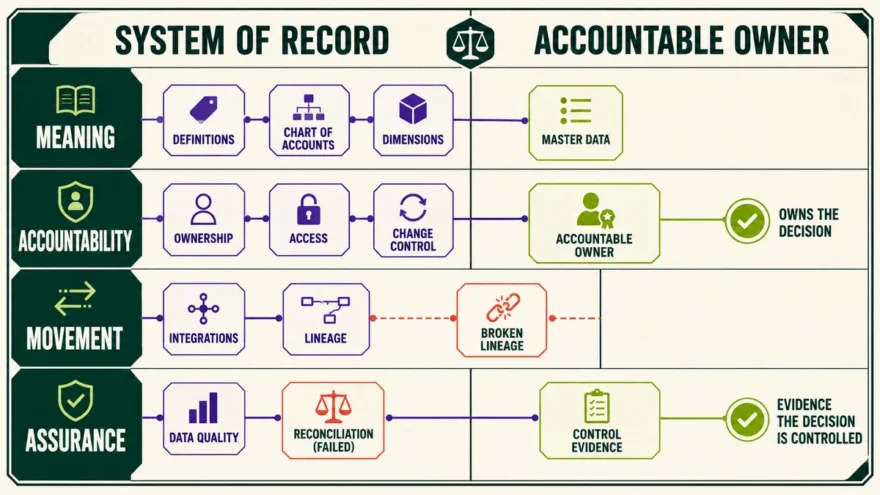
The announced controls answer useful but different questions. Existing entitlements can limit which licensed or permissioned sources an agent may retrieve. A citation and data snapshot can show what the agent consulted. A methodology can document the intended sequence of work. A confidence score can signal how the system rates an output.
None of those artefacts, alone, proves that the retrieved population was complete, the source was interpreted correctly, a calculation used the right period or currency, or a workbook change preserved every dependent formula. Google’s product page states that verifiable lineage and explainability prevent hallucination, but the reviewed materials do not publish the benchmark design, error rates, thresholds or independent test results behind that claim. A control owner should treat it as company-stated and require institution-specific evidence.
Five controls before production use
| Control test | Minimum evidence | Do not approve when |
|---|---|---|
| Source entitlement and retrieval population | Named user and agent identity, inherited entitlements, data licence, query, source timestamp and version, retrieved population, denied sources and preserved citations | A citation exists without proof that the user and agent were authorised or that the relevant population was complete |
| Calculation and transformation evidence | Inputs, formula or code, unit, currency, period, assumptions, recalculation result, benchmark cases and exception thresholds | A narrative answer hides a transformation, a result cannot be reproduced, or a confidence score substitutes for a calculation check |
| Tool and write authority | Read, propose and write permissions by tool and object; protected ranges; segregation of duties; change preview; approval route; and a kill switch | An agent can update a final record under broad user authority, bypass protected content or approve its own action |
| Human approval and downstream use | Named use-case owner and reviewer, allowed audience, visible evidence and change diff, sign-off record, escalation route and reuse limits | The reviewer cannot inspect the evidence, or a draft can flow into client, risk, reporting or transaction work without a new decision |
| Replay, change and exception control | Prompt and context, model, skill, tool and policy versions, data snapshot, tool log, outcome, rollback path, monitoring, failure owner and retained exceptions | A model or policy update can alter an accepted workflow silently, or the institution cannot reconstruct a material run |
Tool-call governance covers only one part of the chain
Google’s semantic governance overview says its policy engine examines proposed tool calls after the model returns a response and compares them with the prompt, conversation history and organisational rules. That can help constrain actions such as data retrieval, document creation or a write request.
The accompanying semantic governance best practices say the preview control does not intercept or modify ordinary dialogue, planning or reasoning before a tool call. Google also warns that the policy layer uses a probabilistic model and that verdicts may be inaccurate. An allow verdict therefore does not validate the research conclusion, and a permitted tool call does not establish that the data, calculation or proposed change is correct.
Spreadsheet updates need a separate change-control boundary
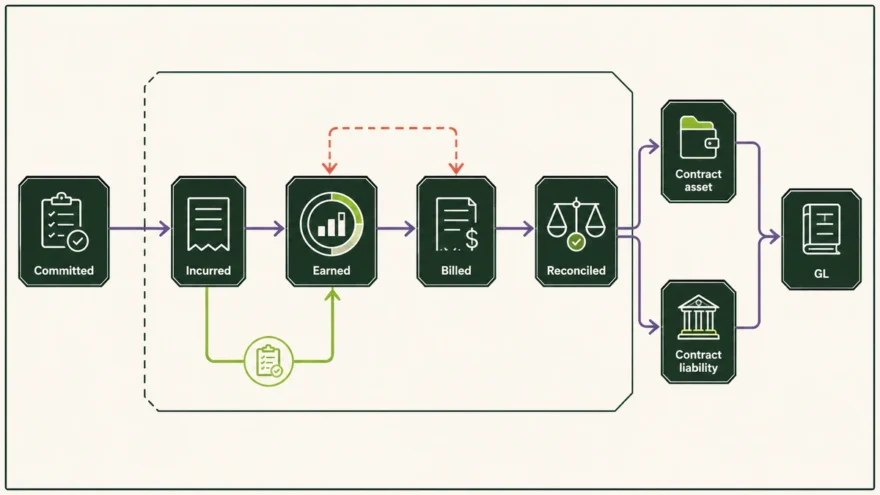
A research answer and a workbook update should not share one acceptance state. Reading formulas may be permitted while writing remains blocked. A proposed change can be reviewed in a copy or diff before it touches the controlled workbook. Final approval should show the old value or formula, the proposed replacement, affected dependencies, recalculation results, protected-range checks and the identity of the approver.
The same principle appears in object-level system-of-record rules: a replicated or accessible record does not become a second authorised writer. For spreadsheets, the institution should identify which workbook, sheet, range or model is authoritative; whether the agent may read, propose or write; and how a rejected or partial change is rolled back without losing the prior state.
Regulatory context does not supply a universal checklist
For US broker-dealers, FINRA’s 2026 GenAI report says existing technology-neutral obligations continue to apply and points firms toward formal review, testing, monitoring, model-version records and human-in-the-loop controls. The exact obligation still depends on the use case and the rules that apply to the firm.
For banking organisations, the Federal Reserve’s April 2026 revised interagency model-risk guidance expressly excludes generative and agentic AI from its scope, while saying general risk-management and governance practices should guide tools outside the document. The five tests in this article are therefore operational acceptance evidence, not a universal legal or supervisory mandate.
What the preview does not establish
- Task-specific accuracy, calculation-error and false-citation rates for the Financial Research agent.
- An independent audit opinion or control test covering the announced features.
- Preview pricing, eligibility, regional coverage, service levels, retention terms or a complete availability matrix.
- The exact approval, rollback and evidence design for Excel or Sheets updates in each customer deployment.
- Measured operating results from the named financial institutions or proof that every cited use case has cleared production approval.
Provider and implementation evidence also matters. The Fujitsu finance AI control checklist sets out platform-level questions for agent identity, logs and change management. The AI provider concentration approval test adds the model, cloud, connector, data-licence and exit dependencies that can sit beneath one managed workflow.
Approve the use case, not the product name
- Choose one bounded task. Name the input population, expected output, permitted downstream use and accountable owner.
- Build an acceptance set. Include known answers, stale and conflicting sources, missing data, unit changes, formula dependencies and adversarial instructions.
- Separate permissions. Test read, propose and write authority independently, including entitlement failures and protected content.
- Retain the decision record. Store the evidence shown to the reviewer, the approved change, the versions in force and every exception.
- Set stop conditions. Define error thresholds, blocked use cases, rollback steps and the owner who can suspend the workflow.
A preview can support controlled testing without authorising production use. A cited research memo may be acceptable as a draft with named review, while spreadsheet writes remain disabled until change evidence, approval and rollback have been demonstrated. That use-case boundary is the production-control test the launch materials do not complete for the institution.