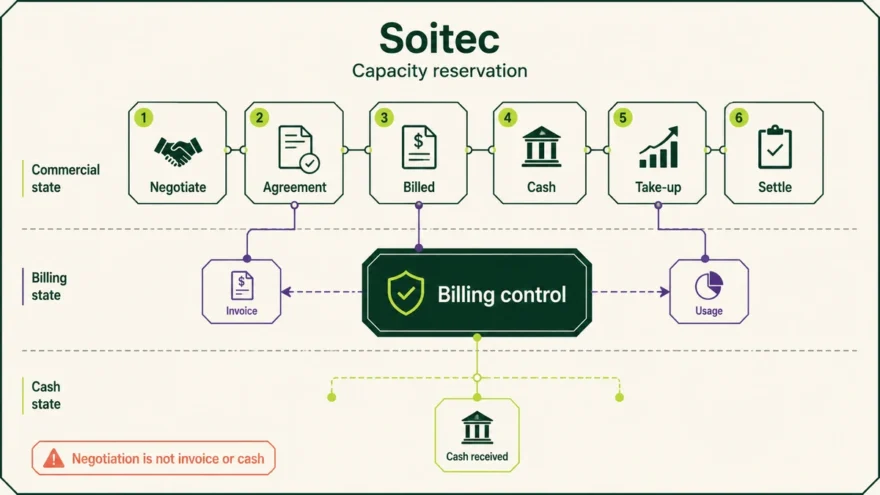
Buying collections software is not mainly a decision about sending more reminders. It is a decision about which account signals become collector actions, which exceptions stay with people, and which expected receipts treasury can use without creating false confidence.
This guide evaluates the collections execution layer after a valid receivable exists. It is distinct from the full order-to-cash process map, which assigns ownership from accepted order through close. It also excludes cash application, where receipts and remittance are matched to open items. The product map reflects official documentation checked on 19 August 2026; it is not a ranking and does not independently verify vendor performance claims.
Quick answer
A suitable system turns overdue-account evidence into controlled collector work and forecast inputs; a weak design automates bad priorities, duplicate contact and unreliable cash expectations.
Decision: Approve, condition or reject a collections-software shortlist only after representative accounts pass workflow, integration, control, reporting and forecast-handoff tests.
Key takeaways
- Choose the system by the quality of its prioritisation, exception handling and evidence trail, not by the number of reminder channels.
- A collector queue should explain why an account is urgent, suppress inappropriate contact and preserve every override.
- Promises, disputes and predicted payment dates can inform a cash forecast, but none should be treated as collected cash.
- Approve a platform only after representative accounts reconcile to the AR subledger and pass role, integration, reporting and audit tests.
What accounts receivable collections software should own
Accounts receivable collections software is a work-management and decision-support layer for pursuing unpaid customer invoices. It combines open-item data with customer context, collection policies and communication records to generate priorities, actions, escalations and management reporting.
The boundary matters because products marketed as AR automation often combine invoicing, payments, cash application, credit and collections. A buyer should separate the module being evaluated from adjacent functions before comparing demonstrations or prices. The application module is the one most often mistaken for collections, and how cash application automation differs from collections sets out where matching, deduction disposition and posting authority belong.
| Layer | Primary job | Evidence of completion | This guide |
|---|---|---|---|
| Collections execution | Prioritise customers, assign work, manage contact, record disputes and promises, and escalate exceptions. | Action history, status changes, commitments, exception ownership and reconciled portfolio reporting. | Owned scope |
| Order to cash | Control the full handoff from order acceptance through billing, receivables, collection, application and close. | Accepted handoffs and control evidence across the process. | Context only |
| Cash application | Identify receipts, read remittance and apply cash to the correct customer and open items. | Reconciled receipt, application and exception records. | Explicitly excluded |
| Credit management | Set and monitor credit limits, holds and exposure before or during trading. | Approved limits, risk reviews and release decisions. | Signals may enter the queue; policy ownership remains separate |
A dedicated platform is most defensible when the portfolio has enough volume, segmentation, entity complexity or exception work that an ERP aging report and shared mailbox no longer produce controlled coverage. It may be unnecessary when one small team can work the full ledger directly in the ERP, customer relationships are few and complex, or the source data is too unreliable to automate safely.
Build the requirements map around collector decisions
A feature is useful only when it improves a defined decision or preserves evidence. The requirements below turn common product claims into finance acceptance criteria.
| Requirement | What the system must decide or record | Minimum acceptance evidence | Warning sign |
|---|---|---|---|
| Customer prioritisation | Which customer, account or invoice needs action now, and why. | Visible drivers, effective date, source data, policy version and override history. | A proprietary score with no reason code or stable tie-back to source data. |
| Collector work queues | Who owns the action, the due date, the required channel and the escalation path. | Role-based queue, workload transfer log, service-level clock and manager view. | Tasks disappear when ownership changes or multiple collectors can act unknowingly. |
| Reminders and dunning | Which message can be sent, when, in which language and under which customer policy. | Approved template, trigger, suppression rule, delivery status and retained message. | Automation continues during an active dispute, payment hold or legal escalation. |
| Disputes and deductions | What amount is disputed, what remains collectible, the cause, owner and target date. | Invoice-level case, attachments, reason code, route, status history and aging. | The full customer balance is removed from the queue because one line is contested. |
| Promise to pay | Who committed to pay what amount, on which date and against which items. | Captured amount, currency, date, source, owner, reminders and kept or broken status. | A free-text note that cannot be reported, aged or reconciled to receipts. |
| Customer portal | What the customer can view, question, promise or pay without exposing unrelated data. | Identity controls, invoice scope, payment status, dispute route and access log. | Portal status can diverge from the ERP without an exception alert. |
| Communication history | What was sent, received, discussed and agreed across email, phone and portal channels. | Time-stamped, searchable timeline with actor, channel, content and retention rule. | Collectors must reconstruct the account from personal inboxes or local notes. |
| Credit-risk signals | Whether changed payment behaviour or exposure should alter priority or escalation. | Signal source, freshness, explanation, threshold, action and human review route. | A risk score silently changes contact treatment or credit action. |
| ERP and CRM integration | Which system owns invoices, balances, contacts, disputes, activities and payments. | Object-level ownership, interface timing, control totals, retry rules and reconciliation. | “Two-way sync” is demonstrated without conflict rules, error queues or cut-off tests. |
| Cash-forecast handoff | Which expected receipts may enter treasury’s forecast and at what confidence. | Expected date and amount, evidence type, confidence source, last update and actual variance. | All promises or model predictions are passed as committed receipts. |
| DSO and management reporting | How portfolio movement, collector coverage and outcomes are measured. | Metric definitions, period and entity scope, denominator, drill-through and subledger reconciliation. | A dashboard cannot reproduce its total from a dated AR extract. |
Prioritisation must be explainable and policy-aware
The largest balance is not always the next account to call. Priority may depend on due date, payment behaviour, dispute status, customer tier, exposure, promised date, prior contact, invoice delivery and the chance that an action will change the outcome. A useful queue displays those reasons rather than only a rank.
Test whether managers can distinguish policy rules from predictive signals. Rules such as “do not contact during an approved dispute hold” should not be overridden by a higher model score. Where machine-generated priorities are used, require the data date, main drivers, confidence or reason code, and a record of human acceptance or override.
Work queues need ownership, capacity and suppression controls
A queue is more than a list of overdue customers. It should allocate actions to named roles, support customer hierarchies and legal entities, show due and overdue work, permit controlled reassignment, and alert managers when coverage falls below policy.
Suppression is as important as generation. The system should stop or alter automated contact when an invoice is disputed, a promise is still valid, a payment is in transit, the customer has entered a controlled escalation, or the account is subject to another approved hold. The reason, approver and expiry date should be visible.
Dunning must preserve the customer and control record
Automated email, letters, calls or text messages should use approved templates and customer-specific cadence rules. The buyer test is not whether a demo can schedule a message. It is whether finance can prove which template version was used, why the message was triggered, whether it was delivered, what the customer replied, and what happened next.
Global organisations should test language, sender identity, time zone, entity branding, payment instructions and local review requirements. A single universal sequence can create inconsistent treatment when contract terms, communication practice or payment methods differ.
Disputes and promises must remain structured
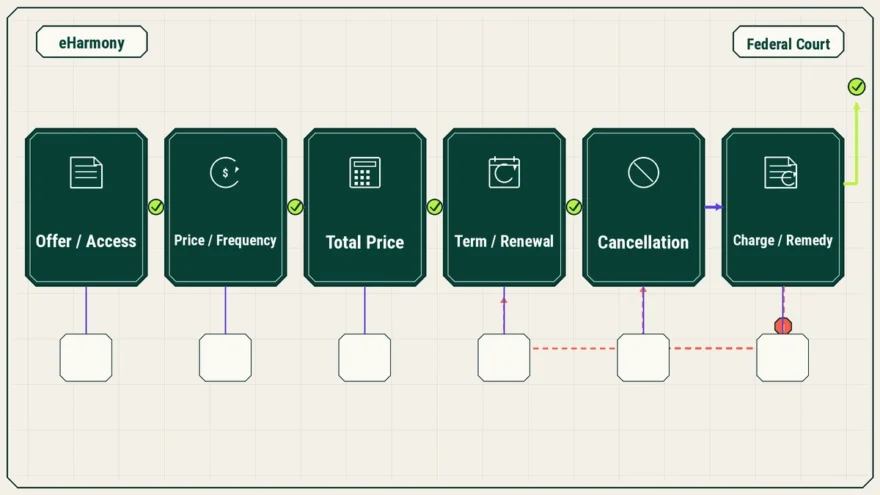
A dispute should separate the contested amount from the collectible amount and route the case to the role that can resolve the cause. That may be billing, sales, logistics, tax, customer service or contract administration. Where the cause is a wrong charge rather than a slow payer, the fix belongs to the billing platform that produced the invoice. Collections software should retain the collection action while making the underlying owner and aging visible. The eHarmony renewal and cancellation control analysis shows why a disputed subscription charge may need the offer, consent and cancellation records resolved before ordinary dunning continues.
A promise to pay needs an amount, currency, date, open-item scope, customer contact, source channel and status. It should become broken only under a defined rule and should be reconciled to an actual receipt. Repeated promises can be useful history, but they are not the same as cash.
Portals and communication history should reduce ambiguity
A customer portal can give buyers a consolidated invoice view, payment options, dispute entry and message history. The evaluation must cover customer hierarchies, delegated users, access removal, payment status and privacy boundaries. Ask what happens when the portal displays a balance that differs from the ERP or when a customer submits a dispute against only part of an invoice.
Email and phone tools should write a shared timeline rather than creating another silo. Confirm how inbound replies are associated with customers and invoices, how attachments are handled, whether calls or notes can be corrected, and how the original record is retained after an edit.
Connect collections to ERP, CRM and the cash forecast
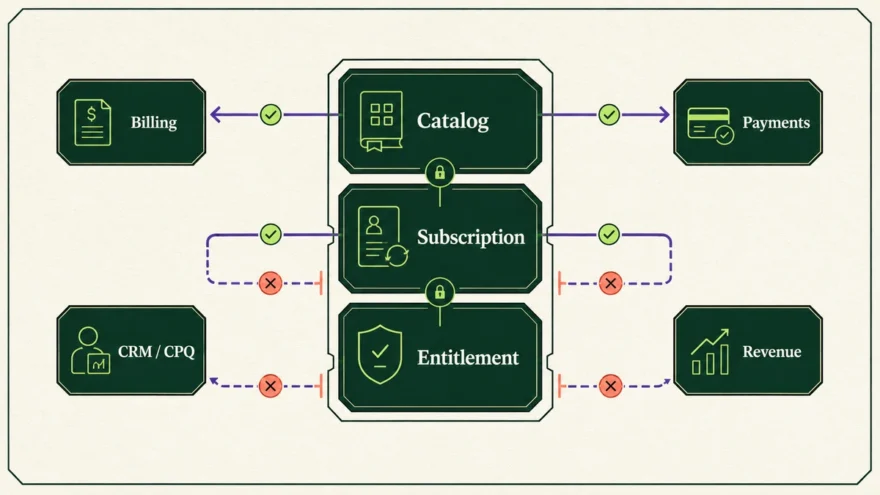
The integration design should identify one system of record for every object. Invoice amount, due date, credit memo, receipt and open balance will usually remain controlled by the ERP or AR subledger. The collections platform may own task status, contact history, promise records and workflow configuration. CRM may own commercial contacts and relationship context. Those boundaries must be explicit. In a recurring-revenue business a further claimant appears, because stopping collection does not cancel a subscription and the platform holding it keeps its own retry and entitlement state.
Use the finance systems integration map to document object ownership, timing, retries, control totals and reconciliation. The proof of concept should include late-arriving updates, reversed receipts, duplicate messages, changed customer masters, partial failures and a full interface replay. A successful API call is not evidence that the portfolio is complete.
Define a controlled forecast handoff
Collections can improve the evidence behind near-term receipt assumptions, but the forecast needs a defined handoff rather than a dashboard export. At minimum, pass customer, legal entity, currency, gross open amount, expected receipt amount and date, evidence type, confidence basis, dispute status, promise status, owner and last-updated timestamp.
Treasury should decide which evidence classes can enter the base case. A kept-payment pattern may support an estimate. A customer promise may support a dated assumption. A predictive date may inform a range. None removes the need to compare forecast with actual receipts and feed the variance back to collections. The 13-week cash-flow forecast process provides the receiving control model.
Make DSO reconcilable, then add operational measures
Days sales outstanding (DSO) is useful only when its sales basis, period, currency treatment, entity scope and receivables population are defined. A vendor dashboard may calculate DSO differently from the finance team’s established measure. Require both to be reproduced from the same dated data before treating a change as performance.
DSO also moves for reasons outside collections, including sales mix, billing timing, credit terms, acquisitions and seasonality. Pair it with measures that explain the workflow:
- current, overdue and severely aged balances, with movement between aging buckets;
- portfolio coverage, overdue actions and accounts with no valid next step;
- contact success and response by channel, segment and template;
- promise coverage, kept-promise rate and value of broken promises;
- disputed value, collectible value and dispute aging by root cause;
- expected-receipt forecast versus actual receipt by evidence class;
- collector overrides, suppressions, reopened tasks and exception aging; and
- dashboard-to-subledger reconciliation differences.
Product map as of 19 August 2026
The following map records capabilities described in official vendor or product documentation. “Company-stated” means the source establishes what the provider says the product does. It does not prove comparative quality, implementation time, realised DSO change or customer outcomes. Product names, packages and regional availability should be rechecked during procurement.
| Product | Documented emphasis | Finance buyer test |
|---|---|---|
| HighRadius Collections | Prioritised work, automated outreach, AP-portal invoice activity, email and calling tools, and dispute-related workflows. | Test how priorities are explained, how portal status is reconciled, and which actions require collector review. |
| Versapay Collections | Risk segments, configurable workflows, team queues, communication and call history, promises, disputes, portal payments and DSO reporting. | Test hierarchy handling, reassignment history, message suppression and the distinction between predicted, promised and received cash. |
| Upflow | Automated collection sequences, segmentation, shared customer timelines, payment portal, DSO and cash views, and ERP, billing and CRM connections. | Confirm module boundaries, data residency and integration behaviour for the exact systems and regions in scope. |
| Billtrust Collections | Account prioritisation, collection procedures, communication tools, case and dispute work, risk signals and cash forecasting within a wider AR platform. | Separate collections acceptance from adjacent invoicing, payment and cash-application modules; test model governance and audit exports. |
| Esker Collections Management | Configurable strategies, customer groups, reminder timing, statements, prioritised calls and tasks, and payment-risk indicators. | Test dispute handoffs, rule changes, multilingual workflows and reconciliation to the source receivables ledger. |
| Quadient Accounts Receivable | Credit, collections, disputes, customer payments, cash application, payment-behaviour signals and forecasting across a broader AR suite. | Confirm the contracted regional package, isolate the collections module, and test how credit and payment signals alter collector actions. |
| FIS GETPAID | Credit-to-cash workflow, collaboration, collection queues and scoring, credit-risk work and adjacent cash-application capabilities. | Test deployment and integration scope, queue logic, multi-entity reporting and the ownership boundary between collections and credit. |
| Oracle Fusion Advanced Collections | ERP-native views of delinquent customers, open tasks, strategies, activities, disputes and open or broken promises. | Test whether the native work area meets coverage, communication, hierarchy and forecast needs before adding a separate platform. |
| SAP Collections Management | Strategy-driven prioritisation and automatically generated worklists for collection accounts with open receivable items. | Test strategy rules, specialist assignment, promises, disputes, contact history and reporting in the deployed SAP edition. |
| Microsoft Dynamics 365 Finance collections | Customer pools and central collections views, plus strategy-based email reminders, calls and collection letters. | Test native functionality against the required channels, customer hierarchies, dispute depth, activity evidence and management reporting. |
The first buying decision is architectural, not a vendor score. ERP-native tools may reduce data movement and duplicate ownership when their workflow is sufficient. A dedicated collections platform may provide deeper prioritisation, communication, collaboration or portfolio management across one or several ERPs. A broader AR suite may be appropriate when portal, payments, cash application or credit are part of one controlled programme. Compare the exact contracted modules rather than the provider’s full website.
Run the proof of concept on real collection scenarios
A polished demonstration proves that a prepared path works. A finance proof of concept should use masked or synthetic records that reproduce the portfolio’s difficult cases and require evidence for every outcome.
- Priority conflict: Load one large low-risk account, one smaller deteriorating account, a valid promise and an active dispute. Check the resulting order and reason codes.
- Customer hierarchy: Use parent and child accounts across two entities and currencies. Confirm visibility, ownership and communication boundaries.
- Partial dispute: Dispute one invoice line while leaving the remainder collectible. Confirm that the queue, portal and reporting preserve both amounts.
- Promise lifecycle: Record a partial promise, change its date, receive part of the amount and let the balance break. Check reminders, status and reconciliation.
- Dunning suppression: Trigger a reminder, then introduce a payment-in-transit flag, dispute hold and legal escalation. Confirm that contact stops for the correct reason.
- Communication continuity: Send an email, receive a reply, log a call, reassign the account and have a second collector continue without losing context.
- Interface failure: Delay an ERP update, resend a batch and reverse a receipt. Check duplicate prevention, error routing and control totals.
- Forecast handoff: Export a model date, a promise date and a manual expected date, then compare each with the actual receipt and variance record.
- Access and override: Attempt template, score, customer, task and write-off-related changes with different roles. Confirm prevention, approval and audit history.
- Reporting tie-out: Rebuild overdue balance, aging, promise value, disputes and DSO from the same dated AR population.
Record each scenario with input data, expected result, actual result, evidence captured, defect owner and retest status. Do not accept “available by configuration” without seeing the configuration, permissions and resulting audit record.
Controls that must survive automation
Automation should increase coverage without weakening ownership. Include these gates in design and approval:
- System-of-record control: define the owner of invoice, balance, customer, task, promise, dispute, payment and forecast fields.
- Completeness and duplicate control: reconcile record counts and values, retain interface errors, and make retries safe.
- Role separation: separate template approval, workflow configuration, collector action, credit decision, adjustment and reporting administration where risk requires it.
- Model governance: document inputs, refresh timing, intended use, reason codes, overrides, monitoring and the route for harmful or unstable output.
- Communication control: approve templates and sender identities, retain delivered content, and enforce holds, frequency limits and escalation rules.
- Master-data control: manage customer hierarchies, contacts, legal entities, languages, payment instructions and ownership changes.
- Exception aging: report unresolved disputes, broken promises, failed messages, unreconciled balances and stale tasks by owner.
- Evidence retention: preserve source data, policy version, user action, system action, timestamp and before-and-after values for review.
For any AI-assisted email or call feature, test whether the collector sees and approves the output before it reaches the customer, how the source context is selected, how inaccurate content is corrected, and whether the original draft and final communication remain auditable.
Localise one global page for US and UK operations
The core collection decision is the same in both markets, so separate country pages are not justified by the evidence reviewed. Localisation belongs in terminology, payment setup, templates, calendars and operating controls.
- Terminology: UK teams may use “credit control” for work that US teams commonly describe as AR collections. Xero’s current UK guidance defines credit control around payment terms, invoice monitoring and overdue follow-up.
- Payment rails: US buyers should verify the required ACH use cases, authorisations and remittance data. Nacha documents corporate CCD and CTX entries. UK buyers should verify Bacs Direct Debit setup, notices, reports and failure handling where Direct Debit is offered.
- Product and contract scope: confirm regional entity support, currencies, payment methods, data location, language, support hours, implementation resources and named integrations. A regional webpage does not prove that every module is sold or hosted on identical terms.
- Operating practice: localise bank and public-holiday calendars, contact windows, sender details, templates, escalation routes and evidence retention. Have the responsible policy or legal owner review jurisdiction-specific collection communications.
Payment functionality should remain a separate acceptance stream. ACH or Direct Debit availability can remove payment friction, but it does not prove that the priority queue, dispute process or cash forecast is controlled.
Set approval gates before commercial negotiation
A shortlist is ready for commercial evaluation only when each candidate can be assessed against the same evidence. Use pass, conditional pass or fail rather than averaging away a critical weakness.
| Gate | Pass condition | Reject or condition when |
|---|---|---|
| Workflow fit | Representative queues, disputes, promises, portal and communication scenarios work end to end. | Core cases depend on manual workarounds with no owned control. |
| Data and integration | Objects, ownership, timing, retries, control totals and reconciliation are documented and tested. | The provider cannot show how omissions, duplicates or conflicting updates are detected. |
| Controls and audit | Roles, approvals, suppressions, overrides and history meet finance and security requirements. | Actions can be changed or sent without sufficient evidence or review. |
| Reporting | Balances and metrics reconcile to an agreed dated source, with clear definitions and drill-through. | Headline KPIs cannot be reproduced or separated by entity, currency, segment and period. |
| Forecast handoff | Expected receipts carry evidence and confidence fields and are measured against actual cash. | Promises or predictions are exported as commitments without status or variance control. |
| Implementation | Migration, configuration, testing, training, cutover, support and ownership are explicit. | Effort, dependencies, regional scope or acceptance responsibility remains undisclosed. |
| Commercial terms | Licensed modules, volumes, users, services, renewal, data export and exit obligations are clear. | The quoted package cannot be mapped to the functionality tested. |
Do not buy dedicated software to compensate for invalid invoices, missing delivery evidence, unowned disputes or poor customer master data. Fixing those causes may produce more value than accelerating contact. Where an ERP-native process passes the same tests, the additional platform must justify its extra data movement, administration and control surface.
Frequently asked questions
What is the difference between accounts receivable software and collections software?
Accounts receivable software can cover invoicing, customer balances, payments, cash application, credit and reporting. Collections software owns the narrower execution problem of prioritising unpaid accounts, assigning actions, managing contact, disputes and promises, and reporting collection progress. Some products combine both scopes, so buyers should test the contracted module rather than the broad product label.
Can collections software reduce DSO?
It can support more consistent coverage, earlier action and better exception routing, but official product claims do not establish the result for a specific buyer. DSO also changes with sales mix, billing timing, terms and seasonality. Set a baseline, reconcile the metric, test workflow drivers and compare outcomes after implementation.
Should a company use ERP-native collections or a dedicated platform?
Use the ERP-native option when it passes the required queue, communication, dispute, promise, reporting and control scenarios without material gaps. Consider a dedicated platform when the portfolio spans several systems or needs deeper prioritisation, communication, collaboration or management capabilities. The additional platform should earn its integration and control cost.