On 12 August 2026, Liventus announced that Lendscape had named it an implementation and data-migration partner for US equipment-finance customers. Liventus will support configuration, data migration, integrations, testing and go-live for Lendscape’s Equipment Finance solution, working alongside Lendscape’s delivery team. Lendscape says it will remain directly involved in every engagement. The solution is available now, but the release does not give a separate effective date for the delivery arrangement.
For a finance-systems or transformation lead, the announcement adds delivery capacity but does not allocate accountability. No named customer engagement, responsibility matrix, acceptance authority, service level, timetable or post-go-live defect model was disclosed. Implementation approval should therefore depend on a written schedule that assigns each migration result and the evidence required to accept it. The Workday deal-stage control analysis applies the same evidence boundary to ownership talks: reported acquisition discussions are not proof that customer contracts, system responsibilities or control ownership have changed.
What changed and what it means
Shared delivery can add implementation capacity, but unclear handoffs can create unreconciled data, failed interfaces, delayed go-live, duplicate cost and defect disputes.
- Decision affected
- Approve or condition a Lendscape implementation only after Lendscape, Liventus and the lender allocate accountability and acceptance evidence for cleansing, reconciliation, interfaces, business testing, cutover and defects.
- Evidence in brief
- Liventus will cover configuration, data migration, integration, testing and go-live alongside Lendscape, which says it will remain directly involved.
- What remains unresolved
- No named customer, responsibility matrix, acceptance authority, service levels, pricing, liability allocation or post-go-live defect ownership was disclosed.
- Next verification
- Require an engagement-level responsibility and acceptance schedule before approving implementation or cutover.
Key takeaways
- Lendscape named Liventus for US implementation and data-migration work covering configuration through go-live.
- The announcement describes shared delivery, not a complete transfer of migration ownership away from Lendscape.
- Equipment lenders should assign cleansing, reconciliation, testing, acceptance and defect ownership before approving cutover.
What Lendscape and Liventus have actually agreed
The announced remit covers configuration, data migration, integration, testing and go-live. Liventus also gains access to Lendscape’s API-first architecture for customer-specific integrations, reporting, dashboards and other development. Equipment Finance Advisor carried the same scope on 13 August.
This is not Lendscape’s first external delivery model. Its partner programme already describes implementation and consulting partners that can configure, deploy and optimise the platform. Lendscape also announced a US equipment-finance partnership with JDR Solutions in April. Liventus, meanwhile, was already named as an implementation partner in Solifi’s December 2025 arrangement. The verified change is the addition of Liventus to Lendscape’s US implementation capacity with a defined configuration-to-go-live remit.
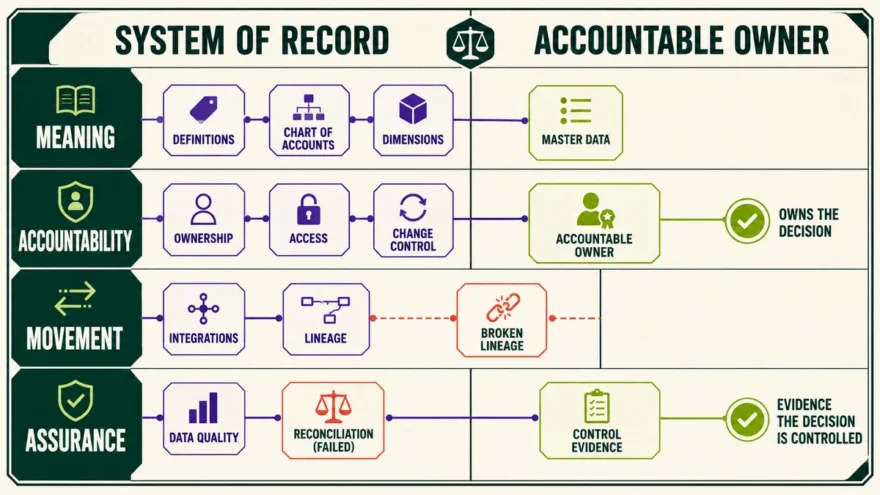
Five migration-control owners to assign before go-live
The following control allocation is Finance Circuit analysis, not a term disclosed by either company:
- Source-data cleansing and transformation. Name who approves source populations, mapping rules, rejected records and reloads.
- Conversion reconciliation. Set the totals, record counts and exception evidence that must bridge legacy and target systems, plus the person who signs them off.
- Interface and regression testing. Separate the party that builds an API or file from the lender-side owner who accepts the end-to-end financial result.
- Business acceptance and cutover. Reserve go or no-go authority for a named customer executive, with rollback triggers and unresolved-exception limits. The Adyen billing-integration case shows what this gate must cover when usage, promotion, invoice, refund, payment and settlement records cross product boundaries.
- Post-go-live defects. Define severity, triage, data repair, financial correction and the boundary between warranty work and a paid change.
What the announcement does not settle
The release does not identify a customer, contract value, implementation start, conversion volume, service levels, warranty period or liability allocation. It also does not say who owns data quality, final reconciliation, business acceptance or defects after go-live.
Lendscape previously said that Allica completed a migration on schedule without disruption. That company-stated outcome does not establish the controls or results of a future Liventus-supported engagement. The next decision-grade evidence will be a named implementation, an engagement-level responsibility schedule or a completed migration with acceptance and defect results.