Axios reported on August 17, 2026, that Stripe has agreed to acquire AI-model marketplace OpenRouter for more than $8 billion in cash and stock. A Bloomberg report published by Fortune put the value above $7 billion and said the final price could change. Neither company confirmed the transaction, and no acquisition announcement appeared in the official announcement pages reviewed at 17:13 UTC. Treat it as a reported agreement, not a closed acquisition or an integration already under way.
For a billing operations controller, the immediate decision is not which platform to retire. It is which system owns each usage, price, balance, invoice, payment, refund, provider liability and settlement record if integration is proposed. Public material describes much of the customer side, but not the model-provider payout and reconciliation design. That gap should set the diligence agenda.
What changed and what it means
Unmapped records could disconnect customer billing from provider obligations, leaving historical credits, usage corrections, payouts and settlement balances unreconciled.
- Decision affected
- Approve any future billing integration or migration only after a control matrix assigns ownership for usage, pricing, customer balances, invoices, tax, payments, adjustments, provider liabilities, payouts and settlement.
- Evidence in brief
- Axios reports a cash-and-stock agreement to acquire; Stripe and OpenRouter documentation establishes the existing usage, invoicing, tax, payment and customer-credit flows.
- What remains unresolved
- No official acquisition announcement, closing status, integration plan, system-of-record map or provider-payout mechanics were located in the sources reviewed.
- Next verification
- Recheck official announcements and require opening-balance, credit, usage-adjustment and provider-liability reconciliations before any migration.
Key takeaways
- Stripe’s OpenRouter transaction remains a reported agreement, not a verified closing or active systems integration.
- OpenRouter supports prepaid credits as well as flexible-term invoicing, so one linear usage-to-invoice flow would misstate the current billing model.
- Finance should assign system-of-record ownership for usage, pricing, balances, invoices, tax, payments, adjustments, provider liabilities and settlement before any migration.
- Public documentation does not explain provider payout mechanics, making opening liabilities and settlement reconciliation a primary unresolved control.
What has been reported, and what has not
The prior transaction state was talks. Axios reported on July 24 that Stripe was in discussions to buy OpenRouter for around $10 billion, citing the Wall Street Journal. The August 17 report advances that state to an agreement, but the evidence still does not establish closing, regulatory clearance, integration timing or a transfer of operational control.
The price needs disciplined attribution. Axios reports more than $8 billion in cash and stock. Bloomberg-derived coverage reports more than $7 billion and says the amount could change. Do not blend them into one settled price. TechCrunch recorded Stripe’s response that it does not comment on rumours or speculation; the Bloomberg report said OpenRouter declined to comment.
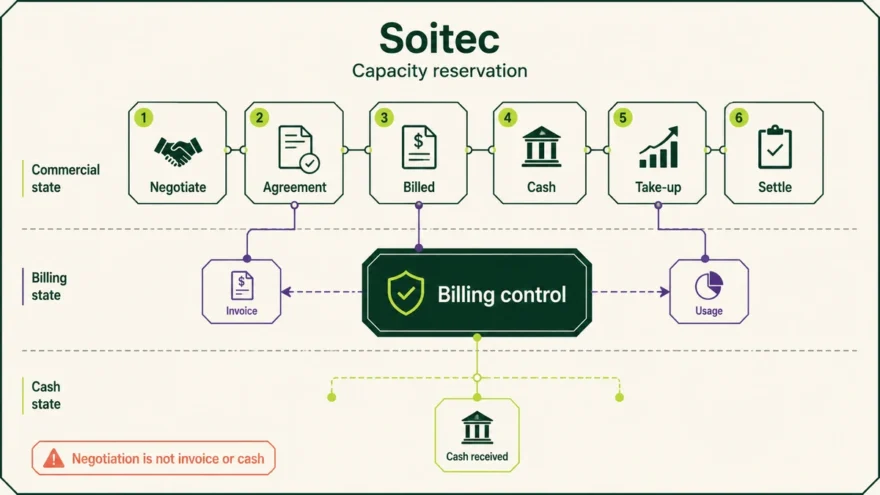
OpenRouter has two customer billing paths, not one linear chain
The companies already have an operating relationship. Stripe’s January 2026 announcement says OpenRouter uses Stripe Invoicing for customers on flexible terms, Stripe Tax for calculation and collection, Radar for fraud controls, and Stripe payment methods for its global customer base.
OpenRouter also describes a prepaid-credit path. Its billing FAQ says credits are deposits, request costs are calculated from provider-reported usage and deducted from the balance, and unused credits have a limited refund window. The control graph therefore branches after pricing: usage may reduce prepaid credit or support an invoice and receivable. Tax, cash application and refund treatment can differ even when the model request is the same.
Assign an owner to every usage, balance and invoice state
A pre-integration control matrix should identify the authoritative record, its legal entity, currency, effective date, approval owner and reconciliation key. The public evidence supports the following starting point, but not a final architecture:
| Control object | Publicly described state | Evidence required before integration |
|---|---|---|
| Usage event | OpenRouter receives provider-reported token totals and returns usage and cost data. | Immutable request ID, actual provider, model, units, timestamp and correction status. |
| Pricing rule | OpenRouter calculates cost using model and provider pricing. | Versioned rate, route, currency, effective period and approval history. |
| Customer balance or receivable | Prepaid credits coexist with flexible-term invoicing. | Customer-level classification, opening balance, invoice status and tax basis. |
| Payment, refund or adjustment | Stripe supports payment collection; OpenRouter defines limited refunds for unused credits. | Link from cash or credit note to the original purchase, invoice or usage event. |
| Provider liability and payout | Mechanics were not disclosed in the public pages reviewed. | Contract rate, accrued payable, payout ID, currency, dispute state and settlement date. |
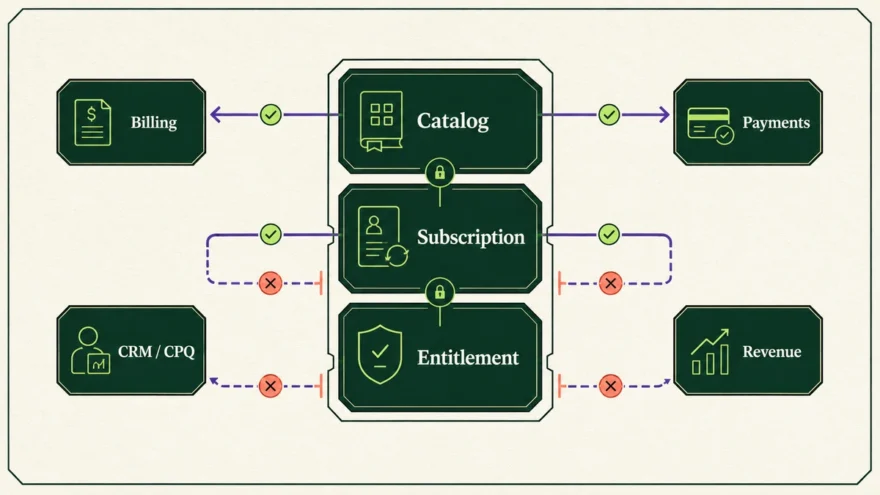
The matrix should not presume that Stripe becomes the owner of every record. A payment processor, billing engine, usage ledger and general ledger can each hold different parts of the same economic event. The control objective is a complete chain of evidence, not a single database.
Preserve credits, refunds and usage adjustments before cutover
Historical credits are more than customer master data. A cutover pack should reconcile each purchase to payment, platform fee, tax, refund eligibility and remaining balance, then separate consumed credits, disputed usage and restricted balances.
OpenRouter’s usage-accounting documentation says responses include token counts, cost in credits, reasoning tokens and cached-token details. Its activity-export guide supports CSV or PDF reports grouped by model, API key or creator. Aggregates are not acceptance evidence. Finance still needs transaction IDs, a frozen opening snapshot and a parallel-run proof that usage was not lost, duplicated or repriced.
Invoice and tax data require their own bridge. OpenRouter’s invoice and tax-ID guide says Stripe attaches saved tax IDs to the customer record and calculates applicable VAT or GST on invoices. A migration must preserve customer identity, tax evidence, invoice numbering, credit notes, payment status and any corrected-invoice history. Otherwise the usage total may reconcile while the legal billing record does not.
Separate provider liabilities, payouts and settlement
The provider side is the largest public evidence gap. OpenRouter routes demand across model providers, but the reviewed documentation does not state how a provider obligation is created, approved, netted, paid or matched to settlement. It would be unsafe to assume that Stripe Connect, Stripe Billing or another Stripe product already performs that function.
Before approval, finance should require the provider rate and currency, actual provider for each request, accrued payable, failed-usage credits, payout schedule, fees or withholding, settlement identifier and dispute status. Where different providers can serve one customer-facing model, the liability must follow the provider that delivered the usage, not only the model name.
The close control is a two-sided reconciliation: customer usage and billing on one side, provider obligation and payout on the other, with cash and general-ledger entries tied to both. Differences should be aged by cause, including late provider usage, price-table changes, customer refunds, chargebacks, failed payouts and currency conversion.
Set migration acceptance evidence before changing systems of record
- Freeze customer credits, open invoices, unapplied cash, refunds, usage adjustments and provider liabilities at an agreed cut-off time.
- Run old and proposed calculations in parallel across representative models, providers, currencies, tax treatments and customer billing paths.
- Reconcile opening balances to the general ledger and require zero unexplained differences above the approved threshold.
- Assign named owners for exception clearance, cutover approval, rollback and the first post-migration close.
Feature overlap is not migration evidence. Approval should depend on a signed control matrix, reproducible opening balances, exception ownership and a settlement test that reaches the bank and general ledger.
What billing teams should verify next
The next status check is an official announcement from Stripe or OpenRouter, followed by any disclosed closing conditions, expected timing and integration plan. The Stripe newsroom and OpenRouter announcement archive did not show an acquisition announcement at the verification time used for this analysis.
Until those records change, billing teams should keep the current operating controls in place and treat integration scenarios as planning assumptions. The decisive questions are which legal entity owns customer credits and receivables, which ledger creates model-provider liabilities, how historical adjustments will migrate, and what settlement evidence will prove that both sides of the marketplace remain complete.