Thomson Reuters announced Thomson on August 24, 2026 as its first proprietary large language model. The company put total development spending at about US$40 million, but its technical report estimates the final Thomson-1.0-Large training run at under US$450,000 in GPU costs over three weeks. The same report says Thomson repurposes Qwen open-weight checkpoints rather than training a foundation model from scratch.
For a finance systems director, the useful case is not a binary build-versus-buy choice. Thomson combines open-weight foundations, proprietary data and training, acquired talent, outside partners, self-controlled serving and continued use of third-party models. The approval question is whether each cost, right, model version and fallback dependency is visible. Product status also needs a caveat: official Thomson Reuters pages conflict over whether the Thomson-powered Tabular Analysis release is already available or still upcoming.
What changed and what it means
Treating the $40 million development programme as a training-run price, or proprietary as full independence, can distort TCO, dependency and control assessments.
- Decision affected
- Approve a build, adapt and buy model architecture only after separating base-model rights, proprietary development, serving costs and third-party routing, with named version and evaluation controls.
- Evidence in brief
- Official launch records and the technical report establish open-weight Qwen lineage, about $40 million of total development cost, a final training run under $450,000 and a multi-model deployment strategy.
- What remains unresolved
- Customer production unit economics, complete upstream licence obligations and a consistent public statement of Thomson-powered Tabular Analysis availability are not disclosed.
- Next verification
- Require a versioned model-source register and cost bridge separating reusable development, model-specific training, serving and third-party routing before approval.
Key takeaways
- The approximately US$40 million figure covers a development programme; it is not the price of the final training run.
- Thomson Reuters adapted Qwen-family open-weight models with full-weight updates, proprietary content, expert work and its own evaluation pipeline.
- CoCounsel remains multi-model, so third-party model spend, routing and fallback dependencies stay inside the cost and control perimeter.
- Finance systems approval should separate foundation rights, proprietary development, serving economics and external-model usage in four governed ledgers.
What changed on August 24
Thomson Reuters had described a proprietary model as still in development in its February model-strategy note. By the August 5 earnings call, management said the first production-ready version had been completed and was expected to power Tabular Analysis later that month. The August 24 announcement changed the status from development or production readiness to a launched model.
The customer deployment record is less clean. An August 20 CoCounsel release said the next-generation product was generally available in the United States and described Tabular Analysis as powered by Thomson. Four days later, the model-launch release said Thomson would be available in Tabular Analysis in an upcoming release. Finance teams should therefore treat the model launch as verified while keeping the exact customer-availability state of that deployment marked unresolved.
The US$40m is a development programme, not a training-run price
The technical report separates two figures that should not share one cost line. It estimates the final large-model training run at under US$450,000 in GPU costs. It estimates total development at approximately US$40 million, including staff, compute, domain-expert compensation and vendor partnerships, with most of the total allocated to reusable research, infrastructure engineering and experimentation over a longer period.
That distinction matters because a programme total and a marginal model run answer different decisions. The programme figure supports a capacity and investment view. The training-run figure supports one model-version cost. Neither establishes annual serving cost, cost per accepted output, customer pricing or the remaining third-party-model bill. Those items are not disclosed in the opened records.
Thomson is a build, adapt and buy architecture
The build component includes Thomson Reuters data preparation, mid-training, post-training, evaluation, red-teaming and model serving. The adapt component begins with Qwen3.5-397B and Qwen3.6-35B open-weight checkpoints, followed by full-weight updates. The buy component includes the Safe Sign acquisition, external compute and vendor partnerships, while CoCounsel continues to use outside frontier models.
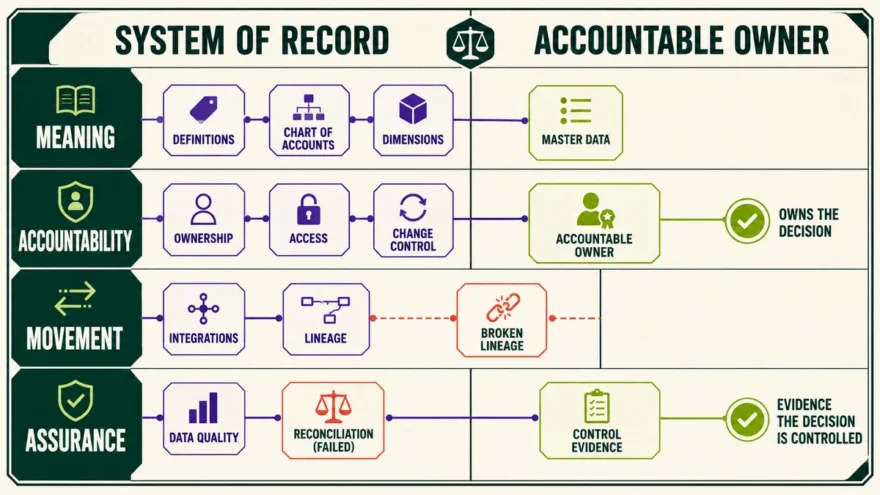
This makes “proprietary” a boundary statement rather than a complete architecture description. Thomson Reuters says it owns and controls Thomson. The technical report also states that it has no control over the data used to train the upstream open-weight model, retains dependence on hardware access and uses open-source stacks for training and serving. A finance technology authority model should therefore name the owner and evidence source for the base checkpoint, adapted weights, training data, evaluation release, serving environment and model router separately.
Keep four cost and ownership ledgers separate
The same discipline used in a five-year ERP TCO method applies here: do not let one vendor or programme number hide unlike cost drivers. A finance-owned AI ledger should distinguish the following layers.
| Ledger | What belongs in it | Evidence finance should require |
|---|---|---|
| Foundation checkpoint | Source model, version, licence terms, permitted use and replacement dependency | Checkpoint identifier, licence record, approval owner and change notice |
| Proprietary development | Data preparation, expert work, training runs, evaluation, red-teaming and reusable infrastructure | Work-package costs, model release, dataset and evaluation versions, retained results |
| Serving and operations | Hardware, hosting, utilisation, latency, monitoring, support and release maintenance | Capacity schedule, unit-cost basis, service levels, incident records and forecast assumptions |
| External model routing | Third-party calls, tools, retries, fallback traffic and minimum commitments | Provider, model and version logs, usage units, rates, routing rule and approved fallback |
This is a management-cost and control schedule, not an accounting conclusion. The opened records do not establish which development costs Thomson Reuters capitalised, expensed or allocated to products. A buyer also cannot infer its own economics from Thomson Reuters’ programme because it may not have the same content rights, expert workforce, acquired team or reusable infrastructure.
Govern model lineage, version changes and evaluation
Thomson Reuters’ development account says the root model has changed many times and will continue to change as open-weight models improve. That is a useful warning for control owners. An approval tied only to the product name can silently outlive the checkpoint, weights, training mixture, safety alignment or evaluation suite that originally passed review.
The model register should retain the base checkpoint, licence and hash; the adapted model version; training-data and evaluation-set versions; benchmark configuration; serving image; routing rule; release date; approval; and rollback target. Material changes should trigger a defined retest rather than inherit approval from an earlier model family.
Benchmark economics need the same source label. The technical report says third-party model costs and results in its headline comparison came from public leaderboards, while Thomson and Qwen costs were estimated from public Alibaba pricing. Those results are company-reported technical evidence, not independently observed customer production economics. Finance should replace them with measured workload, quality, retry and acceptance data before using them in a business case.
CoCounsel’s multi-model design keeps third-party spend in scope
The launch release says CoCounsel will apply Thomson where it has the clearest advantage and use other leading models elsewhere. The August 20 release also describes the product as built on Anthropic’s Claude Agent SDK and says the Anthropic relationship is continuing. Owning one adapted model can reduce dependency without removing the external model, cloud, tool or hardware chain.
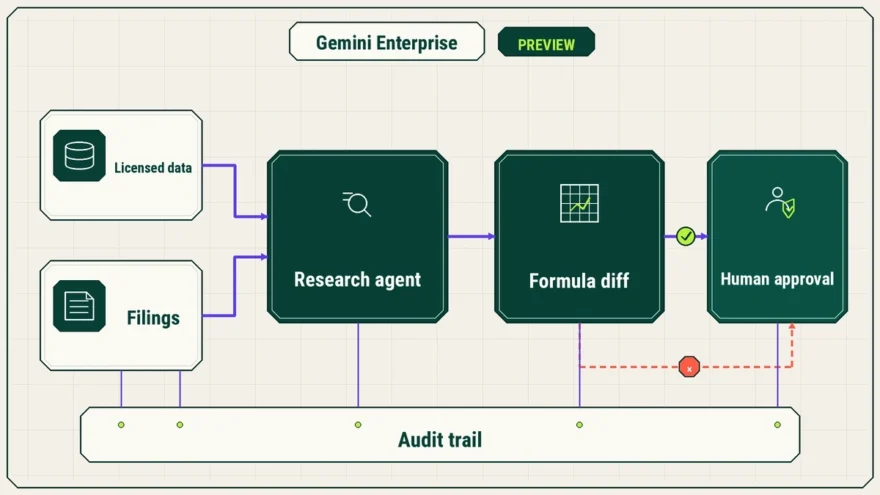
The model-and-cloud concentration test adds the resilience question: whether the workflow can continue, degrade safely or exit when one provider layer is unavailable. Cost attribution needs the same routing visibility. For each production request, retain the selected model and version, provider, input and output units, retries, tool calls, latency, fallback event and accepted-result status. Without those fields, a lower-cost owned model can coexist with an unmeasured external-model bill.
What finance systems should verify before approval
- Reconcile the cost bridge. Separate reusable programme spending, model-specific runs, serving and outside-model usage, with a period, owner and evidence state for each amount.
- Define the ownership boundary. Record what Thomson Reuters controls and what remains dependent on open-weight licences, upstream data, hardware, partners and external models.
- Freeze the approved model identity. Tie evaluation and release approval to a checkpoint, weights, data mixture, serving image and routing policy.
- Measure the buyer workload. Test quality, latency, retry rates, accepted outputs and unit cost on the intended finance or tax workflow rather than importing a legal benchmark conclusion.
- Resolve deployment status. Obtain current product documentation for the exact region, feature and model route before treating Thomson as available in a governed production process.
Thomson Reuters has supplied unusually detailed development evidence for a newly launched proprietary model. The finance decision is still narrower than the headline. Approve the architecture only when the US$40 million programme, the sub-US$450,000 final run, ongoing serving and continuing third-party routing can be reconciled to separate costs, rights, versions and controls.