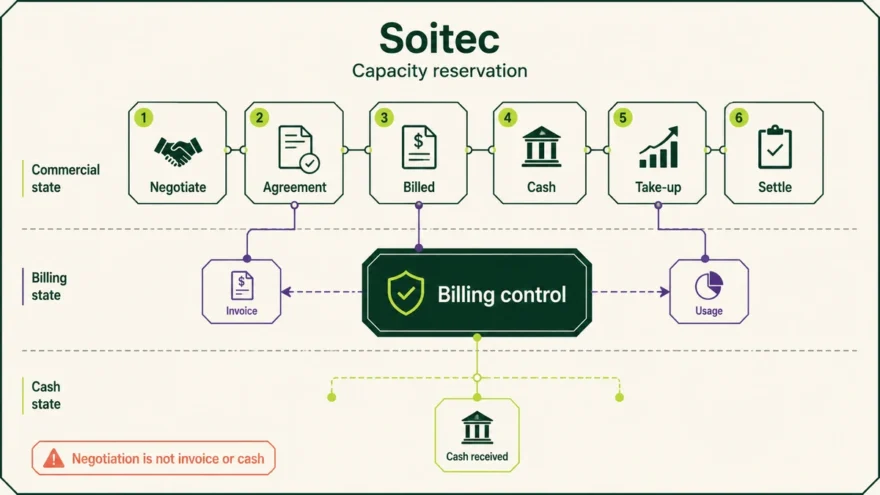
Nebius said on August 12, 2026 that it expects to receive more than $9 billion in customer prepayments during 2026. Roughly 70% of deals closed in Q2 included prepayments, covering 50% to 60% of associated capital expenditure, and four landmark AI-cloud agreements averaged more than $1 billion in total contract value each. The $9 billion is a forward-looking expectation, not cash already collected, invoices already issued or revenue already earned.
The operating issue for a billing and order-to-cash controller is how to keep each state separate as volumes scale. Nebius’s unaudited Q2 statements show current and non-current deferred revenue of $979.4 million and $4.9958 billion at June 30, or $5.9752 billion in total, up from $4.7781 billion at March 31. Public records do not disclose customer-level invoice milestones, remittance matching, credit approval, refund rights or revenue-release workflows. Those controls should be tested, not assumed.
What changed and what it means
Control gaps can leave cash unapplied, misstate deferred and recognised revenue, duplicate credits or refunds and create customer-balance disputes.
- Decision affected
- Set the minimum contract, billing-document, cash-application, deferred-revenue, credit and refund controls before large customer prepayments are accepted and released against service delivery.
- Evidence in brief
- Nebius disclosed a 2026 expectation above $9bn, Q2 prepayment prevalence and capex coverage, and $5.9752bn of deferred revenue at June 30.
- What remains unresolved
- Public records do not disclose customer-level invoice milestones, remittance matching, credit approvals, refund rights or revenue-release workflows.
- Next verification
- Map each expected and received advance to one contract, billing document and release schedule, then reconcile bank, subledger and general-ledger balances.
Key takeaways
- Nebius expects more than $9 billion of customer prepayments in 2026, but the amount is guidance rather than cash already received.
- Customer commitments, expected prepayments, bank receipts, deferred revenue and recognised revenue need separate control states.
- Each receipt should be matched to the legal entity, contract, billing document, currency and performance-obligation schedule before application.
- Credits, refunds, contract changes and revenue releases need independent approval and a reconciled audit trail.
What Nebius disclosed, and what the $9bn figure does not mean
Nebius’s June balance sheet and cash-flow statement establish a large existing deferred-revenue population, not the collection of the full expected amount. The cash-flow statement reported a $1.197 billion increase in deferred revenue during Q2. The balance at June 30 consisted of $979.4 million current and $4.9958 billion non-current deferred revenue.
The previous-state record is equally important. Nebius’s March 31 financial-statement note said it records deferred revenue after cash is received and before performance obligations are fulfilled, including amounts that may be refundable. It also said remaining performance obligations include both deferred revenue and unbilled contract revenue. A signed customer commitment can therefore exist without being billed, a billed amount can remain unpaid, and a received payment can remain outside revenue until the relevant obligation is fulfilled.
Reuters’s Q2 report also paired the prepayment expectation with more than $40 billion of customer commitments. Neither figure identifies what has been invoiced, collected, applied or earned.
Use six controls from contract to close
| Control | Evidence before posting or release | Hold or escalate when |
|---|---|---|
| 1. Contract and obligation record | Executed contract, customer legal entity, obligation, amount, currency, term and owner | The commitment is not executable, the payer differs from the contracting entity or the obligation is unclear |
| 2. Billing-document and milestone control | Approved document, contractual trigger, tax treatment, due date and billing owner | The document does not match the contract, a milestone lacks evidence or the same trigger was billed twice |
| 3. Cash-application control | Bank value date, amount, currency, remittance reference, customer and contract identifiers | The receipt is short, aggregated, cross-entity, cross-currency or cannot be matched without an assumption |
| 4. Deferred-revenue control | Opening balance, receipts, release schedule, classification and closing balance | Cash is posted directly to revenue, the schedule lacks contract support or the subledger does not tie to the general ledger |
| 5. Credit, refund and modification control | Reason code, original receipt, remaining obligation, approval and settlement method | A credit and refund can both be issued, rights are unclear or a change is posted outside the original contract record |
| 6. Close reconciliation | Bank, billing, cash-application, subledger and general-ledger reconciliation | Unapplied cash, stale credits, negative balances or current and non-current differences remain unexplained |
Control the billing document and any milestone trigger
Nebius’s public product documentation distinguishes the document used to request an advance from the invoice issued after payment processing. Its bank-transfer guidance says commitments are generally prepaid through a proforma invoice and that different arrangements may apply. That page describes standard cloud billing, not the four strategic Q2 agreements, so the enterprise control must follow each executed contract rather than assume the public workflow applies.
If a contract uses milestone billing, the invoice should carry the contract identifier, milestone, covered capacity or service period, currency, tax treatment, due date and payment reference. The billing system should block a duplicate trigger and retain the evidence that the milestone was authorised. A sales forecast, capacity reservation or customer email should not create an invoice unless it satisfies the contract’s billing condition.
Apply cash by contract, not by customer name
Large advances often arrive with fewer identifiers than the billing team needs. The matching hierarchy should start with the receiving bank account, payer legal entity, currency, amount, value date and remittance reference, then connect the receipt to the billing document and contract. An unmatched receipt belongs in a controlled suspense queue with an owner and ageing rule, not in the oldest open customer item by default.
One payment may cover several contracts; bank fees may create a short receipt; an affiliate may pay for another entity; or the payment may arrive in a different currency. The control record should show who resolved the difference and the evidence used. Cash application should not rewrite the contract or billing document to force a match.
Keep deferred revenue separate from recognised revenue
The deferred-revenue or contract-liability subledger should bridge the opening balance to receipts, credits, refunds, foreign-exchange effects, revenue releases and the closing balance by contract. Release to revenue should use documented service or capacity evidence and the applicable performance-obligation schedule. The bank receipt date proves cash collection; it does not by itself prove service delivery. That bridge is the control test when comparing revenue recognition products, because a tool that cannot roll the balance forward by contract leaves the reconciliation manual.
The same status discipline appears in the data-center project-readiness analysis, which separates customer commitments, financing availability and cash that is actually drawable. For billing, the sequence runs in the other direction: commitment, expected prepayment, billing document, cash receipt, deferred revenue and recognised revenue. Each transition needs its own evidence and approval.
Current and non-current balances need a controlled review. Most of Nebius’s June deferred revenue was non-current, so finance should retain the source schedule and approval for any reclassification.
Control credits, refunds and contract changes as one chain
Nebius’s disclosed policy says deferred revenue can include amounts that may be refundable, but the public record does not identify which customer balances carry refund rights. Billing should therefore record the contract clause, trigger, notice period and approval route for each refund-capable advance. A generic customer-service request is not enough evidence to release cash.
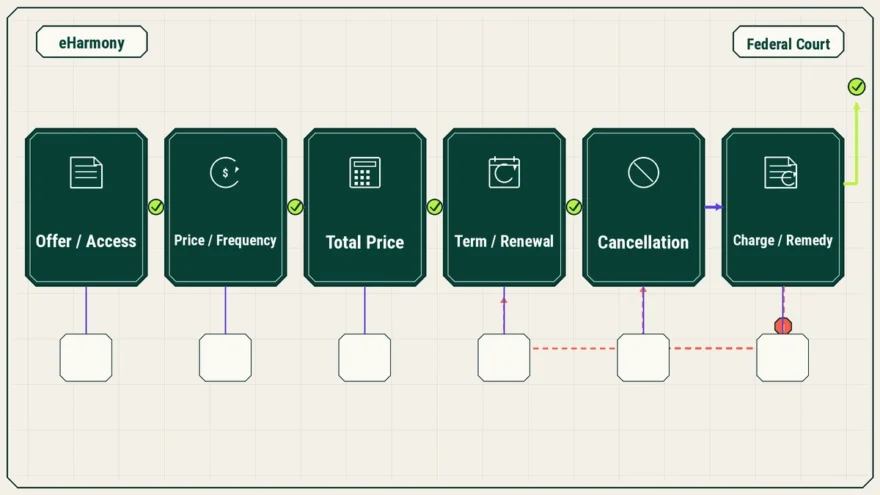
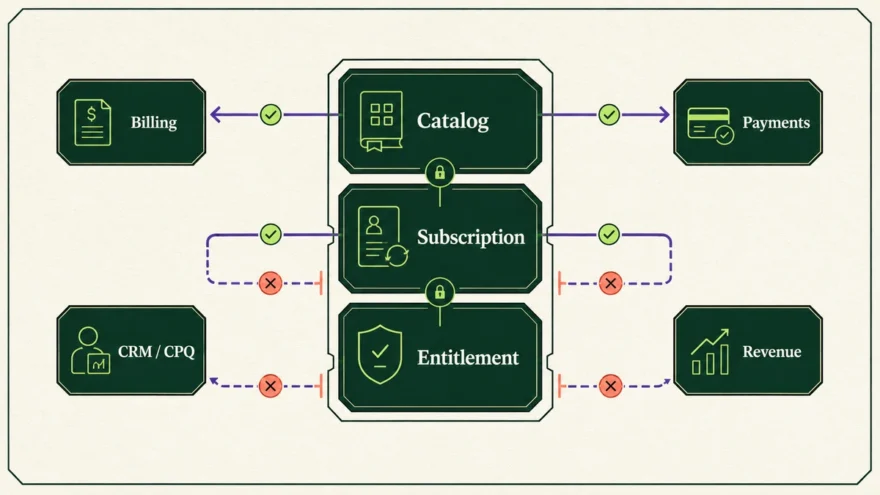
Credits, refunds and modifications should point back to the original receipt and remaining obligation. The control should prevent a customer from receiving both a credit memo and a cash refund for the same amount, and it should stop a contract change from leaving the old release schedule active. Approval should sit outside the person who applied the cash, with heightened review for unusual amounts, changed bank instructions or payments to an entity other than the original payer. The NewRez force-placed-insurance settlement adds a regulatory example in which an identified billing error connects to charge termination, a full refund and documented reporting. The Adyen billing-integration control chain extends that test across usage, promotion, invoice, payment and settlement records, where one reversal can create several technical entries that must resolve to one customer outcome.
Reconcile the full chain before close
The close reconciliation should compare bank receipts, billing documents, the cash-application queue, the deferred-revenue subledger and the general ledger. It should explain unapplied cash, partial applications, negative customer balances, stale credit memos, pending refunds, foreign-exchange differences and current versus non-current classification changes. A total-ledger tie is not enough if customer-level exceptions remain hidden.
The preparer should certify the population and exception ageing; the reviewer should challenge material or stale items and confirm that revenue releases have service evidence. A billing close needs an evidence ladder for incoming customer cash rather than one undifferentiated balance.
What billing and revenue accounting should verify now
- Can every customer commitment, expected prepayment and received amount be traced to one legal entity and executed contract?
- Does each invoice or proforma reference the contractual trigger, amount, currency, tax treatment and covered service or capacity?
- Which matching keys are mandatory before application, and who owns aged suspense items?
- What evidence permits a deferred-revenue release, and can the subledger bridge every movement to the general ledger?
- Which clauses permit credits, refunds or contract changes, and how does the control prevent duplicate value?
- Do current and non-current classifications, customer balances and bank receipts reconcile before close sign-off?
This is a control response to scale, not an allegation that Nebius’s process failed. The public evidence establishes the size, timing and accounting status of customer prepayments. It does not disclose the customer-level workflow. Finance should use that gap to define the evidence required before each dollar moves from commitment to cash, from cash to deferred revenue and from deferred revenue to recognised revenue.