Search for subscription management software and the first page returns two products under one name. One is a consumer tool for cancelling forgotten streaming plans. The other is the system a recurring-revenue business uses to hold what each customer has bought, what they may use, and what changes when they upgrade, pause or leave. This page is about the second.
The harder problem sits inside the B2B category. Billing platforms, entitlement platforms, ERPs and CRM suites all sell something called subscription management, and each means a different object by it. Until a buyer names which object needs a system of record, comparisons collapse into feature lists every candidate passes.
Quick answer
The subscription record rather than the invoice decides what a customer may use and what they should be charged next, so when it is split across systems the failure surfaces as wrong access, wrong renewals and revenue that cannot be explained.
Decision: Approve a subscription management platform only after naming the system of record for the plan catalog, the subscription and the entitlement, and proving every change event survives the handoff to billing, payments and revenue.
Key takeaways
- Subscription management owns three objects: the plan and price catalog, the subscription and its lifecycle states, and the entitlement the product enforces. Name the owner of each before comparing products.
- Grandfathering is the default. Chargebee documents that a new plan price applies to new subscriptions only, so a published increase does not reach the installed base by itself.
- Entitlement drift is the failure no invoice reveals. Stripe documents that feature changes reach existing subscriptions only at the start of the next billing period.
- Stopping collection is not cancelling a subscription. Recurly documents these as separate actions, so involuntary churn and receivables collections need different owners.
- Pricing disclosure is uneven: some vendors publish an amount, some a package without one, several nothing. The comparison has to survive that.
What subscription management software actually owns
Subscription management software is the system of record for what a customer has agreed to buy on a recurring basis, for how long, and what that agreement entitles them to use. It holds three objects, and a platform is only as good as its ability to keep them separate and connected at once.
- The plan and price catalog: the plans, add-ons, tiers, currencies and frequencies a customer may be sold, with the version history of every price.
- The subscription: one customer’s instance of a plan, with a term, a quantity, scheduled and applied changes, and a lifecycle status.
- The entitlement: the machine-readable statement of what the product must grant that customer now, read by the application at runtime.
Lifecycle status is where the subscription record and the billing record stop agreeing, and buyers under-test it. Stripe documents eight statuses (incomplete, incomplete_expired, trialing, active, past_due, canceled, unpaid and paused) and draws a distinction most evaluations miss: a paused subscription generates no invoices, while pausing collection still generates invoices and leaves the status unchanged. One word in a demo, two different receivables.
Chargebee adds a non-renewing status for a subscription that will cancel at the end of the current term, plus flags for whether a change is scheduled and when. A subscription management tool that cannot express “still active, already ending” misreports entitlement and renewal forecast for the whole notice period.
Subscription management, enterprise billing, CRM and revenue recognition are four systems
These four are routinely sold as one platform and bought as one project. The clearest evidence that they are not one system is commercial: the vendors price them separately. Chargebee lists Billing, CPQ and RevRec as distinct products on its published price list, with RevRec quote-only, and Recurly prices RevRec as an add-on from $850 per month (as of 22 August 2026).
| System class | Authoritative object | What it must not own | Evidence to demand |
|---|---|---|---|
| Subscription management | Catalog, subscription states, entitlement | Invoice numbering, tax, revenue schedules, the pipeline | Change history with effective dates and acting user |
| Enterprise billing | Rated charge, invoice, credit note, amount due | What the product grants at runtime | Line derivation from catalog version, quantity, period |
| CRM and CPQ | Account, opportunity, approved quote, terms | Live subscription state after the deal closes | Quote version, approval trail, conversion record |
| Revenue recognition | Performance obligation, allocation, schedule, journal | Customer-facing change execution | Accepted and rejected records, modification treatment |
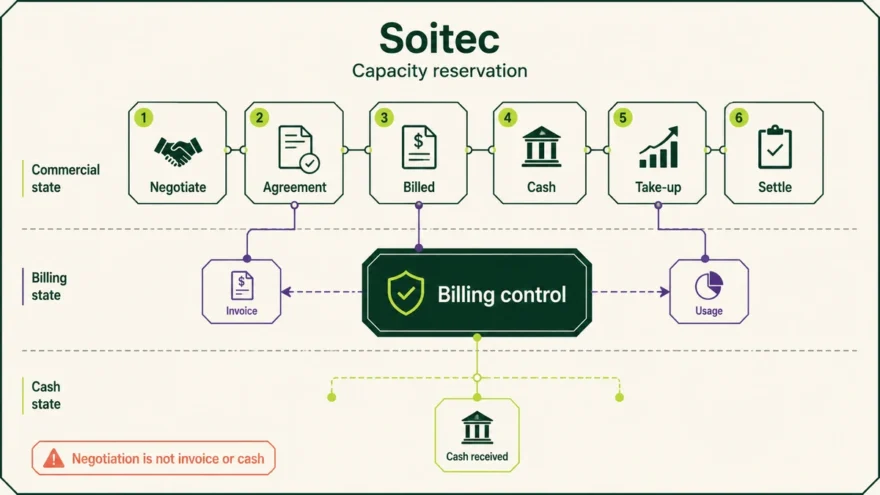
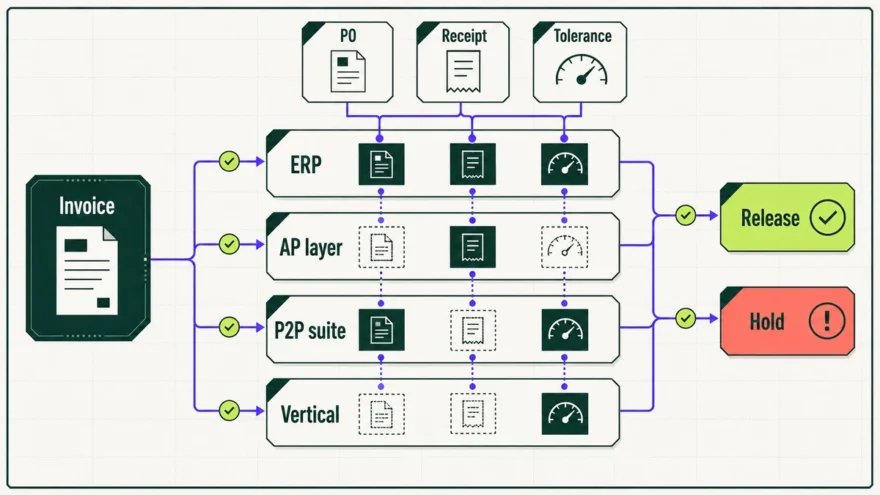
The billing boundary is the first to get wrong: a billing engine answers whether an amount is correct, a subscription system answers whether the customer should hold that plan at all. The enterprise billing platform evaluation covers the invoicing side of that split, and this page leaves those tests there.
The CRM boundary is the second. A CRM records what was sold, not what is true today, because it is edited by people whose job is the next deal rather than the current entitlement. Salesforce’s own answer is a separately licensed product: Agentforce Revenue Management is $150 per user per month for Growth and $200 for Advanced, and the published edition pricing requires a Sales Cloud, Service Cloud or CRM licence beneath it (as of 22 August 2026). That is a per-seat commitment on an existing estate, a different cost shape from everything else here.
Subscription management product map as of 22 August 2026
Inclusion rules, stated so they can be argued with. A platform is listed if it publishes official documentation for creating and changing a customer subscription, if that documentation is reachable without an account, and if it is sold to B2B recurring-revenue businesses rather than to consumers tracking their own spending. Grouping follows the centre of gravity each vendor’s own documentation describes. This is not a ranking, not an endorsement and not exhaustive.
| Platform | Segment | Documented centre of gravity | Boundary to verify |
|---|---|---|---|
| Recurly | Subscription lifecycle | Subscriptions with dunning campaigns, retry logic, account updater | Whether RevRec is contracted; it is priced separately |
| Chargebee | Subscription lifecycle | Catalog of items and item prices, subscriptions, entitlements, scheduled changes | Which of Billing, CPQ, RevRec and Growth are in scope |
| Maxio | Subscription lifecycle | Subscription and usage billing with collections for B2B software | Where the billing threshold moves the contract to a quoted tier |
| Zuora | Subscription lifecycle | Termed and evergreen subscriptions changed through named order actions | Which modules cover revenue, payments and collections |
| Stripe Billing | Payments-native | Subscriptions, prorations, entitlements and invoices on the payment stack | Whether entitlement provisioning is built in-house on the webhook |
| Paddle | Merchant of record | Checkout, subscription billing, tax registration and remittance as seller of record | Which legal entity contracts with the customer, and the revenue effect |
| Orb | Usage and consumption | Event ingestion, metrics, plans and invoicing for usage and hybrid models | Whether the subscription or the metering pipeline is authoritative |
| Lago | Usage and consumption | Open-source metering and billing, self-hosted or managed premium | Who owns upgrades, availability and audit evidence when self-hosted |
| Stigg | Entitlement and packaging | Catalog, meters, entitlements and credits as the access-control layer | Which system issues invoices when Stigg holds the entitlement |
| NetSuite SuiteBilling | ERP-native | Subscriptions, price books, price plans, change orders and usage rating in NetSuite | Documented limits, including that it is not for physical inventory |
| Salesforce Agentforce Revenue Management | CRM-native | Quote-to-revenue lifecycle managed on the CRM platform | Prerequisite CRM licensing and per-user cost across the revenue team |
Disclosure is where a neutral map earns its keep, because this category does not disclose consistently. The states below separate a published amount, a published package with no amount, an explicit quote-only position, and an absent public price. Every figure was read from the vendor’s own pricing page on 22 August 2026; none is a negotiated rate.
| Platform | Disclosure state | Published list price (as of 22 August 2026) | Not in that figure |
|---|---|---|---|
| Recurly | Numeric list price | Starter: $249 per month plus 0.9% of billing volume, first $40,000 of monthly billings included | All-Access, quoted from a $1m volume minimum; RevRec from $850 per month |
| Chargebee | Numeric list price | Flow: $0 platform fee plus 0.80% of monthly billing value, or $424 per month plus 0.65% on a commit | Enterprise Plus, CPQ, RevRec and Growth |
| Maxio | Numeric list price | Grow: $599 per month for up to $100,000 in monthly billings | The Scale tier above that threshold |
| Stigg | Numeric list price | Build: $0 per month. Pro: $399 per month, or $331 per month billed annually | Scale and BYOC; overage above included entity and event volumes |
| Paddle | Numeric list price | 5% plus 50 cents per checkout transaction, covering payment processing and tax remittance | Custom rates at volume; products under $10 or needing invoicing |
| Stripe Billing | Geo-routed pricing; US amount unverified | A percentage-of-billing-volume price and a custom-domain fee were served outside the US; no US rate is stated here. | Payment processing and the US-specific Billing rate; confirm both from a US pricing view. |
| Salesforce | Numeric list price, per user | Growth: $150 per user per month. Advanced: $200 per user per month | The prerequisite Sales Cloud, Service Cloud or CRM licence |
| Orb | Package published, no amount | Core, Advanced and Enterprise are named with their contents, all marked custom pricing | Any rate. Pricing rests on billings and ingested events |
| Lago | Package published, no amount | Premium is offered cloud or self-hosted with no figure; open-source deployment is free to run | Any premium rate, and the internal cost of self-hosting |
| Zuora | Quote only | None. The pricing page carries no figure and no named priced edition | Everything, including which modules the quote covers |
| NetSuite SuiteBilling | No public pricing page found | None. SuiteBilling is documented as a NetSuite feature set, not a separately priced product | Everything, including the NetSuite subscription beneath it |
Read that as a cost-shape comparison before a cost comparison. A percentage of billing volume grows with the business, a flat fee does not, a per-user price grows with headcount, and a merchant-of-record rate replaces separate payment processing. Those shapes reduce to one number only with a volume forecast, a headcount forecast and a decision on which adjacent costs are in scope.
Govern the plan and price catalog before comparing products
The catalog is the quietest control in this category and the one with the longest tail. Chargebee documents that price points let one plan carry variations for different currency and frequency combinations, that a price point identifier and its pricing model cannot be changed once defined, and that when a plan price changes the new price applies to new subscriptions while existing ones keep renewing at the old price.
That is grandfathering by default, with three consequences worth deciding rather than discovering in year two. A published increase does not reach existing customers unless someone migrates them. The forecast has to model an installed base on prices no longer in the catalog. And live price versions only accumulate.
Write the catalog rules down before shortlisting, then ask each candidate to demonstrate them rather than confirm them: who may create a price, who approves it, whether a price can be edited or only superseded, how an override is recorded and reviewed, and the migration path when a price changes.
Entitlements are where the subscription record fails silently
Everything else in this category eventually produces a document a human reads. Entitlements do not: if entitlement state is wrong, a customer keeps a feature they stopped paying for, or loses one they are paying for, and nothing on the invoice says so.
Stripe’s entitlements documentation names the moving parts: features carry a unique lookup key, features attach to products, and active entitlements are created when a customer subscribes. Three documented details shape the control design. Feature changes reach existing subscriptions at the start of the next billing period rather than immediately. The entitlement summary webhook carries at most ten entitlements, with a URL to page through the rest. And the documentation recommends persisting entitlements internally, so a second copy exists by design and can drift.
Chargebee frames the same idea as a set of privileges attached to plans and add-ons that the application checks before granting access. Stigg sells the entitlement layer itself, which is reasonable when packaging changes faster than the billing contract.
The buyer test is a reconciliation, not a demonstration. Ask for a report listing every customer whose enforced entitlement differs from the entitlement implied by their subscription, with the age of each difference. A candidate that cannot produce it is offering entitlement correctness as an assumption.
Test the change events before you test the invoice
Upgrades, downgrades, seat changes, add-ons, pauses and cancellations are the operating load of a subscription business, and where a platform’s opinions are hard-coded. Stripe separates billing-related updates, which create prorations and can generate invoices, from non-billing updates such as metadata and payment-method changes, which apply immediately without them. That split is the right shape for an approval policy: the two groups do not need the same authority.
Proration is a policy decision presented as a setting. Stripe documents three behaviours, create_prorations, always_invoice and none, and records that negative prorations are not automatically refunded and positive prorations are not immediately billed unless you make them so. It also documents two credit modes: the classic mode can credit a customer at a price they never paid, and the flexible mode credits at the price last billed. A team that has not chosen between those has still chosen one.
Build the test pack from change sequences rather than single events:
- Mid-term upgrade, then downgrade back inside the same period, with the net cash effect explained line by line.
- Seat increase then decrease below the original count, checking whether credit exceeds the amount ever charged.
- A change scheduled for period end, then cancelled before it takes effect, checking that entitlement never moved.
- A pause and resume, verifying which of subscription status and collection state actually changed.
- A change made while the current invoice is unpaid, which is where credit for unpaid time appears.
Then decide who may execute each. Self-service in the portal, an assisted change by support and a negotiated amendment by sales are three authority levels that one API call will serve unless the buyer configures otherwise.
Renewals, terms and amendments are contract events
Renewal design most resembles contract administration, and it is poorly served by tools built around a monthly card charge. Zuora’s vocabulary is explicit: a subscription is termed or evergreen, changed through named order actions including add product, update product, change plan, remove product, renewal, suspend, resume and cancel, and driven by trigger dates such as contract effective date, customer acceptance date and service activation date.
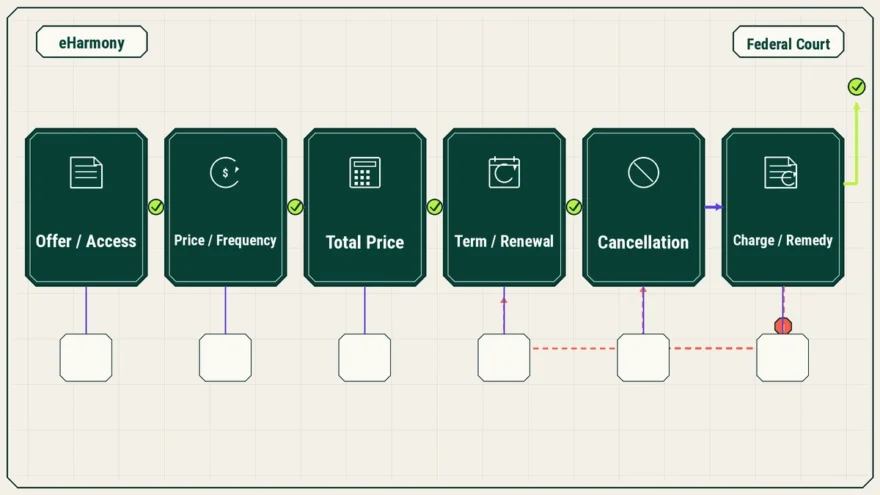
Enterprise subscription management software has to carry that vocabulary because enterprise contracts use it. A termed subscription with a notice period, a ramp across years and a renewal uplift is not expressible as a plan and a card. Ask each candidate how it represents a fixed term converting to evergreen, a non-renewal notice served inside the notice window, and a renewal priced before the term ends but effective after it. The eHarmony subscription ruling shows why the customer-facing term, renewal status and cancellation effective date must remain provably aligned rather than inferred from the next charge.
Backdating deserves its own gate, because it is where the subscription record and the accounting record silently diverge. Chargebee publishes explicit limits: one-time actions can be backdated up to two years, subscription changes must fall within the current billing term, and an invoice tied to a change can be backdated only to the current term start or one month, whichever is shorter. It also warns that backdating deletes later metered-usage data and removes unbilled charges raised in between. A platform whose backdating rules are undocumented should be assumed to have none.
What the subscription record must carry about usage
Usage needs a firm scope edge. The subscription has to hold the commercial shape of usage: included allowance, overage rate, commitment, credit pool and expiry, and the ceiling the product enforces. It does not have to hold the metering pipeline, the rating engine or the late-event correction path. Stripe documents that usage-based billing is not subject to proration, so a mid-period change prorates the recurring component and leaves usage rated separately. That seam is where two systems must agree on a period boundary.
Payments, retries and involuntary churn
Most cancellation in a card-billed subscription business is not a decision. It is a card that expired, which makes retry and update behaviour a revenue control rather than a payments detail.
Recurly publishes hard boundaries: retries will not exceed 20 total transaction attempts or 60 days from the invoice creation date, soft declines such as insufficient funds are the primary candidates for intelligent retries, and hard declines are generally treated as final. The upstream fix belongs to the card networks: Visa documents that Visa Account Updater exchanges new account numbers and expiry dates between issuers and acquirers for credential-on-file merchants, and that merchants participate through their acquirers. Confirm that with the acquirer rather than from a product page.
The control buyers most often miss sits at the end of the cycle. Recurly documents that stopping collection on an invoice does not automatically cancel the related subscription, and that subscriptions cancel only when an invoice fails dunning and the settings expire them. In Stripe an exhausted retry sequence moves a subscription to canceled or unpaid depending on configuration, and in the unpaid state invoices are still created and then immediately closed. Either way a customer can hold an active subscription and a live entitlement after finance has written the balance off.
Draw the line explicitly. Automated retries and payment-method recovery belong to the subscription platform. Named, aged, disputed and escalated balances are a different discipline, with their own selection criteria in accounts receivable collections software. Agree the handover point, the status on both sides and who cancels the subscription before either system is configured.
The handoff to billing, the ledger and revenue recognition
A subscription change is an accounting event before it is an invoice line. Under US GAAP, ASC 606-10-25-10 defines a contract modification as “a change in the scope or price (or both) of a contract that is approved by the parties” and notes it may be described as a change order, a variation or an amendment depending on industry and jurisdiction. IFRS 15 applies the same five-step model, effective from 1 January 2018.
So the revenue system needs the modification, not just the resulting invoice. NetSuite shows what that looks like inside one product: the revenue arrangement for a subscription includes all revenue elements from its subscription lines, and an accounting preference controls whether subscription revisions create revenue elements, with modification elements merged into that arrangement. Across separate products, that merge becomes an interface the buyer specifies.
Specify it with four required fields per change: what changed, when it became contractually effective, what it changed from, and which approved commercial document authorised it. An invoice carries the first and part of the second. Only the subscription record reliably carries all four. The wider interface design sits in the finance systems integration map, and the surrounding billing and receivables sequence in the order-to-cash process map.
Controls, migration and the approval decision
Subscription platforms concentrate three powers usually kept apart: changing what a customer pays, changing what a customer receives, and changing both retroactively. Access design should reflect that rather than inherit the shipped defaults.
| Control | What it prevents | Evidence to require in the proof of concept |
|---|---|---|
| Catalog change authority | An unapproved price reaching live customers | Role list showing who can create a price, plus one approval record |
| Customer-specific override log | Discounts that never expire and never get reviewed | Report of active overrides with owner, reason and expiry |
| Effective-dated change history | A change whose timing cannot be reconstructed later | Full history for one subscription: actor, timestamp, effective date |
| Backdating limits | Retroactive edits that contradict a closed period | Documented limit, plus a rejected attempt outside the window |
| Entitlement reconciliation | Access that no longer matches the subscription | Exception report with the age of each mismatch |
| Data export | A migration that cannot be reversed or audited | Full export of catalog, subscriptions and change history |
Migration tests those controls for real, and buyers routinely budget it as the smaller job. Moving a live estate means carrying customers mid-term, with their historical amendments, grandfathered prices, scheduled changes and stored payment credentials, into a catalog model that may not represent all of them. Ask for the migration limits in writing before contracting, and treat an answer that opens with a services estimate rather than a data model as unanswered.
Run a scripted proof of concept on a copy of real data: a price list with at least one grandfathered price, a mid-term upgrade and downgrade pair, a scheduled change, a pause and resume, a failed-payment sequence run to its end state, a backdated correction, and a full export of everything held for one customer. Then choose on architecture as much as on features:
- An ERP-native option when the estate is modest and the catalog stable, so keeping the subscription next to the ledger removes a reconciliation finance now does by hand. NetSuite is candid about its edges: SuiteBilling is not intended for selling physical inventory items.
- A specialist platform when packaging changes faster than the finance system can absorb, when self-service change is a product requirement, or when entitlement enforcement has to be real-time.
- A CRM-native option when quote-to-renewal is the dominant workflow and the per-user cost across the revenue team is understood and accepted.
- A merchant of record when cross-border tax registration is the binding constraint, and only after confirming what selling through another legal entity does to revenue presentation.
- Reject any option that cannot produce the entitlement reconciliation, the effective-dated change history and the full export, whatever else it does well.
The finance technology stack reference architecture sets out how to assign one authoritative owner per object before that choice is made. Approve on evidence the buyer generated: every capability here states what a product is documented to do, not what it will do on one company’s data, catalog and contracts.
Frequently asked questions
What does free or open-source subscription management software leave finance to build?
It leaves the control layer. Lago publishes an open-source deployment alongside a premium tier with no listed price, and Stigg offers a zero-cost build tier. The buyer still owns hosting, upgrades, availability, access control, change-history retention and audit evidence. Free covers the licence, not the segregation of duties finance will be asked for.
Can a CRM own the subscription record without a separate subscription platform?
It can, but as a licensed product rather than standard CRM functionality. Salesforce prices Agentforce Revenue Management at $150 and $200 per user per month for Growth and Advanced, and states that a Sales Cloud, Service Cloud or CRM licence is required (as of 22 August 2026). Cost then scales with headcount, not billing volume.
What should a smaller B2B company evaluate instead of an enterprise subscription platform?
Start from the entry tiers that publish both a price and a volume ceiling, because the ceiling is the real decision. Maxio publishes $599 per month up to $100,000 in monthly billings, and Recurly $249 per month plus 0.9% of volume with the first $40,000 included (as of 22 August 2026). Model the month you cross it.
How do you compare a platform priced on billing volume with one priced per user?
Not by unit price. Build a three-year model with a billing-volume forecast and a revenue-team headcount forecast, then run each pricing shape against both. A percentage of volume rises with success, a per-user price rises with hiring, and a merchant-of-record rate absorbs payment processing the others bill separately. Compare total cost on identical assumptions.