Australia’s Federal Court on 25 August 2026 found eHarmony liable for misleading conduct across free access, subscription pricing, single-price disclosure, automatic renewal, one-month membership claims and cancellation representations. The decision in ACCC v eHarmony, Inc [2026] FCA 1208 is a liability judgment. Penalties, consumer redress and other relief have not yet been decided.
For a subscription billing controller, the operating issue is not merely whether a disclosure exists somewhere in checkout. It is whether the offer shown to the customer, the plan and price selected, the consent captured, the contract term, the renewal state, the cancellation effective date and the resulting charge can be reconciled as one evidence chain. eHarmony told Reuters it was reviewing the judgment and considering its options; the company’s current Australian purchase and cancellation flows were not independently verified for this article.
What changed and what it means
A mismatch can create disputed renewals, refunds or redress, collection reversals, revenue adjustments and an incomplete remediation population.
- Decision affected
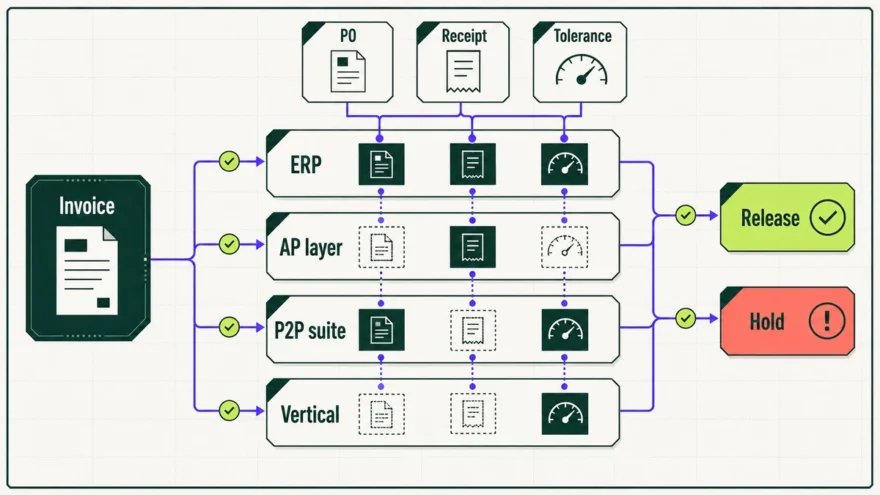
- Decide whether each recurring charge can be released only when the versioned offer, checkout consent, contract term, renewal status, cancellation effective date and charge record agree.
- Evidence in brief
- Federal Court judgment [2026] FCA 1208 establishes six liability findings and records the July 2024 pricing split, renewal data and procedural orders.
- What remains unresolved
- Penalties, consumer redress and other relief are undecided; the current eHarmony purchase and cancellation design was not independently verified.
- Next verification
- Reconcile the offer-to-charge evidence chain before the next renewal run and monitor proposed orders due 8 September 2026.
Key takeaways
- The Federal Court found liability on six groups of conduct; penalties, redress and other orders remain undecided.
- A later checkout disclosure did not cure every earlier product-page representation, so billing evidence must begin with the offer version.
- The July 2024 changes ended one monthly-price representation, but the Court still found single-price and automatic-renewal problems.
- Turning off future renewal, ending the current term, deleting a profile and releasing an outstanding balance are separate system states.
- Remediation should reconcile charges, collection activity, credits, refunds, chargebacks and write-offs at customer level.
What the Court found, and what remains undecided
When the ACCC filed proceedings on 7 September 2023, the pricing, renewal, duration and cancellation issues were allegations. The 25 August 2026 judgment establishes liability on six groups of conduct: “free dating”, advertised monthly prices that omitted a mandatory instalment fee, failure to specify the single price, automatic renewal, one-month membership claims and cancellation representations.
The Court had separated liability from relief. Its orders require the parties to file agreed or competing proposed orders by 8 September 2026 and, if they cannot agree, written submissions by 22 September. The ACCC says penalties, consumer redress and other orders will be decided later. Those outcomes, the size of any remediation population and the cost to eHarmony are therefore unknown.
The judgment records 44,856 Australian users whose Premium membership automatically renewed during the stated period, including 7,148 whose subscriptions renewed two or more times. The figures show scale; they do not establish that every renewal was an individual contravention or that every customer is entitled to redress.
The July 2024 changes split the pricing findings
The decision draws an important line through the purchase flow. Before July 2024, eHarmony advertised six, 12 and 24-month plans as “from $x / month”, while monthly instalments attracted an additional mandatory fee. The Court found the stated amount was likely to be understood as the monthly payment and that later information on the payment page did not negate the earlier product-page representation.
From July 2024, eHarmony added wording that the displayed monthly amount applied when making a one-time upfront payment and that the total plan price depended on payment frequency. The Court found that this change ended the particular representation that the advertised amount itself could be paid monthly. It did not end every pricing issue. The Court still found a failure to specify the “single price”, meaning the minimum quantifiable consideration for the subscription, prominently and as one figure.
The same distinction matters for renewal. The revised page stated that plans automatically renewed for 12 months at regular rates unless cancelled, but the Court found that the statement was too small and insufficiently connected to the listed plan terms to displace the dominant impression of a finite six, 12 or 24-month subscription. A billing control should therefore test the impression created by the whole path, not only whether a renewal sentence exists.
Six controls from the customer promise to the charge
The Court did not prescribe a billing-control framework. The table is Finance Circuit analysis of the evidence problem exposed by this Australian case, not legal advice for another jurisdiction.
| Control | Question to test | Evidence to retain |
|---|---|---|
| 1. Offer-to-entitlement | Do the advertised free and paid capabilities match what the product actually grants? | Versioned offer copy, capability matrix, entitlement rules and effective dates. |
| 2. Price-to-payment frequency | Does every monthly, quarterly or annual amount include each mandatory fee for that option? | Plan version, fee rule, selected payment frequency and recomputed charge schedule. |
| 3. Minimum total price | Is the minimum total commitment displayed as one figure wherever a component price is promoted? | Rendered page capture, total-price calculation, currency, term and payment-option inputs. |
| 4. Initial term and renewal | Can the customer see the initial term, renewal term, renewal price and action required to stop renewal? | Checkout version, consent timestamp, renewal notice, renewal price and renewal-disable status. |
| 5. Available duration | Can the system sell only the membership durations the page says are available? | Offer-to-catalog mapping, allowed term values and rejected invalid combinations. |
| 6. Cancellation-to-remediation | Does a cancellation request produce the promised effective date and the correct charge, collection and refund state? | Request time, effective date, term balance, charge eligibility, collection hold and remediation record. |
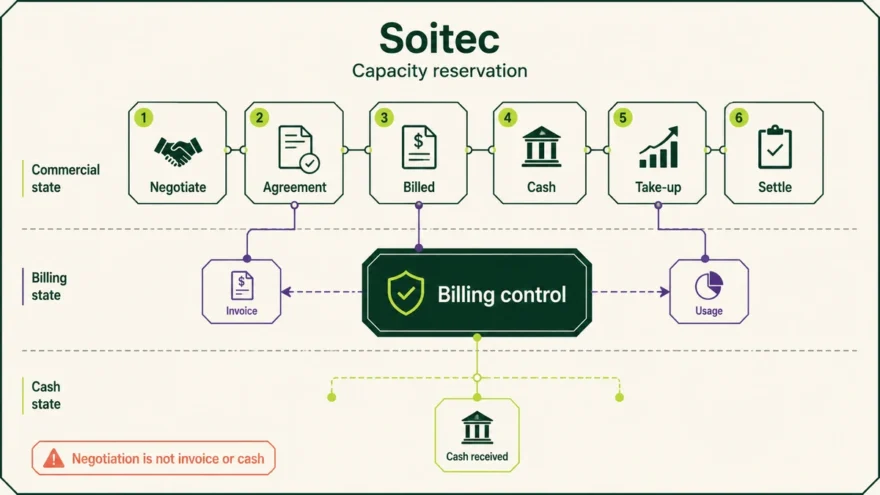
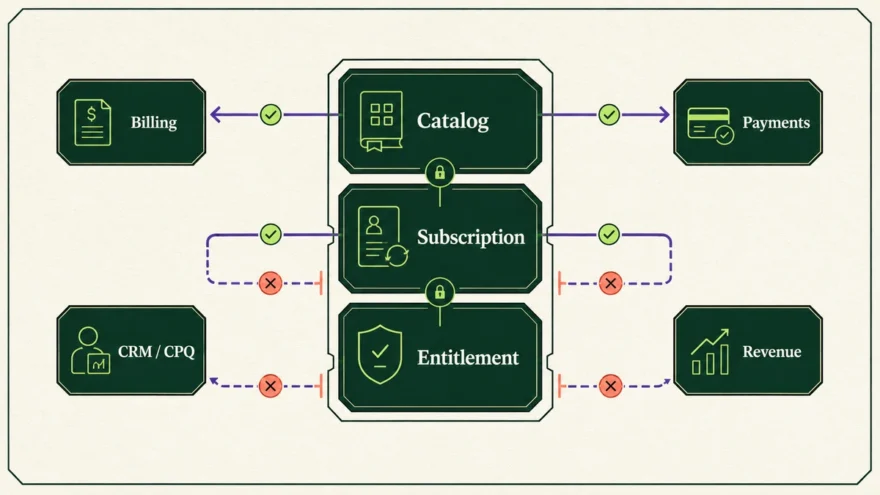
The first control belongs with the system that owns the plan, subscription and entitlement. The charge calculation and invoice evidence then pass to the enterprise billing acceptance model. Neither system should infer a missing customer promise from a technically valid charge schedule.
Keep cancellation, renewal and account deletion as separate states
The cancellation finding was narrower than a general right to leave at any time. The representation at issue suggested that a Premium subscription could be cancelled during the subscription period. In fact, cancellation was effective only at the end of the period, with no refund or waiver for the remaining balance. That distinction should be explicit in the data model and in customer-facing language.
At minimum, a recurring-billing record should distinguish: automatic renewal enabled or disabled; cancellation requested; cancellation effective date; current-term service active or ended; remaining contractual balance; profile or app access deleted; dispute or collection hold; and refund or credit status. The judgment’s consumer evidence illustrates why these cannot be collapsed. Deleting a profile or ceasing to use a service did not itself switch off renewal in the examples before the Court.
Test both sides of the deadline. A request before the renewal cutoff should prevent the next term and charge. A request after renewal should identify whether the new term is valid, what service remains available, whether the balance is collectible and which remediation route applies. The wider handoff belongs in the order-to-cash control map, where billing readiness, dispute ownership, collections and close evidence remain distinct.
Reconcile charges, credits, write-offs and collection activity
The judgment records $9,306,144 provided to Australian consumers between 5 November 2019 and 13 June 2024 through chargebacks, credits including refunds, or write-offs. About $8.92 million comprised credits or refunds deducted or waived from amounts owing or paid back to customers. The Court did not determine that the whole amount resulted from the contraventions, and it is not a redress award.
For finance, the number is evidence that remediation cannot be measured from refunds alone. The customer-level population should join the original offer and checkout version to the initial charge, renewal charge, complaint or cancellation event, collection referral, chargeback, credit, refund, write-off and final balance. Any amount excluded from remediation needs a reason code and approval. Any disputed renewal sent to collections needs an owned hold or release decision, using the controls in the receivables collections decision layer.
What billing teams should test before the next renewal run
- Trace a sample from offer to ledger. Reconstruct the page shown, plan selected, total commitment, payment frequency, consent record, renewal state and resulting charge without relying on current screenshots.
- Recalculate each price representation. Confirm that component prices, mandatory fees and minimum total price agree for every active plan and payment option.
- Exercise cancellation timing. Test before-cutoff, after-cutoff, mid-term, profile-deletion and payment-failure scenarios, with expected entitlement and balance states.
- Gate renewal release. Hold any renewal where the consent version, renewal price, notice evidence or cancellation state is incomplete or contradictory.
- Build the remediation ledger. Reconcile charges, credits, refunds, chargebacks, write-offs and collection status to one customer outcome.
Next court milestones
The immediate legal milestones are the proposed orders due on 8 September 2026 and, if the parties disagree, submissions due on 22 September. The eventual orders on penalties, consumer redress, injunctions, costs or other relief may change the finance consequence and the required remediation evidence. eHarmony told Reuters that it was carefully reviewing the judgment and considering its options.
This article should be updated when the Court makes relief orders, if eHarmony announces a material response, or if current Australian purchase and cancellation flows are independently documented. Until then, the verified changed state is liability, not a final penalty or redress outcome.