Antofagasta reduced its full-year 2026 Group copper-production guidance on 13 August 2026 to 625,000–655,000 tonnes from 650,000–700,000 tonnes after the severe-weather shutdown and recovery work at Los Pelambres. The midpoint is 35,000 tonnes lower, a 5.2% reduction calculated from the two published ranges. Operations have resumed and are ramping, so the changed state is revised guidance, not an announcement that Los Pelambres remains shut.
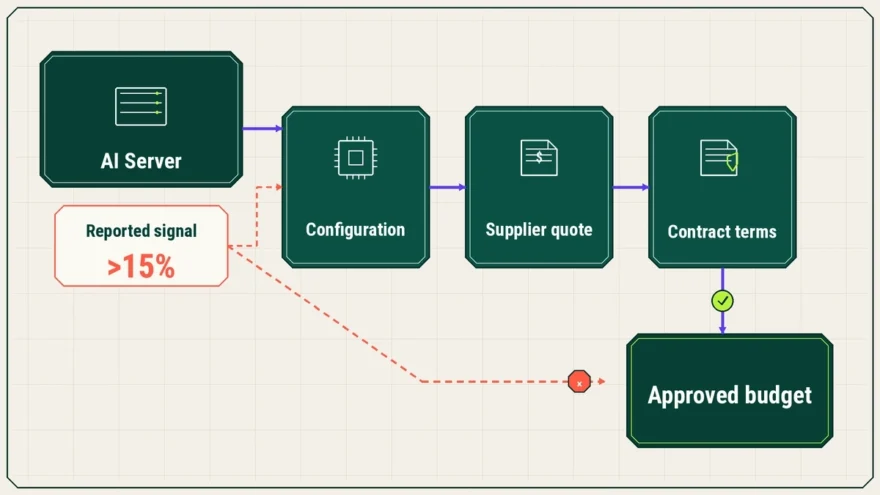
For a copper category manager, the revision is a reason to reopen the remaining-2026 exposure model. It is not evidence that a buyer has lost allocation, that a supplier will miss a shipment, that an indexed contract price must change or that safety stock should rise. Antofagasta does not disclose customer allocations, downstream contract terms, refined-copper availability or any buyer’s inventory position. Procurement should change the base plan only after the producer signal can be traced to a named product, supplier, contract and replenishment gap.
What changed and what it means
Treating producer guidance as a buyer allocation can create excess purchasing and working-capital drag, while failing to test real exposure can leave volume, purchase-price and continuity risk unmanaged.
- Decision affected
- Decide whether to reopen remaining-2026 copper coverage and whether supplier allocation, indexed-price assumptions or inventory triggers should change after mapping actual exposure.
- Evidence in brief
- Antofagasta’s 13 August results reduce 2026 Group copper guidance from 650,000–700,000 to 625,000–655,000 tonnes after the Los Pelambres disruption.
- What remains unresolved
- Customer allocations, shipment effects, refined-copper availability, contract pass-throughs and buyer inventory positions are not disclosed.
- Next verification
- Trace product, supplier and contract exposure, then update coverage and stock scenarios only where the guidance change reaches an actual supply or price mechanism.
Key takeaways
- Antofagasta cut 2026 Group copper guidance to 625,000–655,000 tonnes after the Los Pelambres weather disruption.
- The 35,000-tonne midpoint reduction is a company-level forecast change, not a disclosed customer allocation or shipment shortfall.
- Procurement should map copper form, supplier lineage, contract volume and replenishment timing before changing coverage.
- Physical-supply risk, indexed-price risk and inventory policy need separate evidence and separate approval triggers.
What changed in Antofagasta’s 2026 guidance
Antofagasta’s 15 July production report retained the 650,000–700,000-tonne range and expected quarterly output to increase sequentially over the rest of 2026. After severe rain and intermittent power outages caused an orderly shutdown at Los Pelambres, the company said in a 24 July operational update that the mine had resumed operations and the full-year range was still unchanged.
The 13 August results moved the forecast to 625,000–655,000 tonnes. Mining and processing activities were continuing to increase, with mine movement ramping as conditions allowed. Antofagasta said there had been no material impact on key equipment and infrastructure, but inspections had identified repairs needed to certain pipeline platforms and water-management systems.
| Date | Company-stated position | Procurement treatment |
|---|---|---|
| 15 July 2026 | Guidance unchanged at 650,000–700,000 tonnes | Retain the approved base case unless buyer-specific evidence changes |
| 24 July 2026 | Los Pelambres resumed; guidance still unchanged | Open a watch item for recovery and supplier communication |
| 13 August 2026 | Guidance reduced to 625,000–655,000 tonnes | Recalculate exposure scenarios, but do not assume a buyer shortfall |
The 35,000-tonne midpoint cut is not a buyer allocation
The midpoint change is useful for scenario sizing because it provides one comparable number. It does not say where the revised output will fall within the Group, which customers will receive less material, whether contractual allocations will change or when any effect would reach a downstream buyer.
Product form is the first control. Antofagasta reports Los Pelambres output as copper concentrate, while Centinela produces both concentrate and cathodes and Antucoya and Zaldívar produce cathodes. The Group figures for Los Pelambres and Centinela are expressed as payable metal contained in concentrates and cathodes. A manufacturer buying cathode, wire rod, cable, fabricated components or finished assemblies may therefore sit several commercial steps away from the production forecast.
Procurement should not label spend “Antofagasta-exposed” from commodity type or supplier geography alone. The exposure needs evidence linking the purchased item to a supplier, smelter, refiner or contractual source that could be affected by the revised production range.
Map supplier and product exposure before changing coverage
Build the review at purchase-line level, not at the headline-tonnage level. For each copper-bearing input, retain four records:
- Purchased form and specification: cathode, rod, wire, cable, alloy, fabricated part or another defined input, including grade and approved substitutes.
- Supply lineage: the direct supplier, any disclosed smelter or refiner, and whether the contract or supplier confirmation identifies Antofagasta material.
- Volume rights: contracted quantity, allocation language, tolerance, cancellation rights, substitute-source rights and any supplier commitment that remains open.
- Timing and cover: usable on-hand stock, confirmed inbound quantity, demand through the earliest reliable replenishment date and qualification time for an alternative source.
If the supplier cannot establish a connection to Antofagasta output, keep the event as market context rather than a coded physical-supply exposure. If the connection exists but the supplier confirms volume and delivery are unchanged, retain a watch scenario and record the evidence date instead of moving the downside case into the base plan.
Separate indexed-price risk from physical-supply risk
A producer forecast can affect market expectations without changing a buyer’s invoice formula. The price decision depends on the actual contract: the referenced index, quotation or averaging period, currency, premium, freight, treatment or refining adjustment, and any reopening or pass-through clause. The physical-supply decision depends on allocated volume, shipment timing, lead time and qualified alternatives.
Those two paths can move separately. A buyer may retain full volume while the indexed component changes, or face a delayed shipment while a fixed-price period remains open. The China input-price assumption test applies the same control principle: an external price or supply signal must be mapped to the buyer’s category and contract before finance changes the approved assumption.
| Observed evidence | Permitted planning response | Do not infer |
|---|---|---|
| Producer guidance cut only | Refresh watch and downside scenarios | Buyer allocation loss or immediate price increase |
| Supplier confirms reduced allocation or delayed shipment | Replan the affected quantity and delivery period | A portfolio-wide shortage |
| Contract index, premium or pass-through condition changes | Update purchase-price and margin scenarios for the covered volume | A physical supply failure |
| Available cover falls below demand through reliable replenishment | Escalate buffer stock, expediting or qualified reallocation | A blanket inventory increase across copper-bearing items |
Set supplier-allocation and safety-stock triggers
Supplier reallocation should start from a documented gap: a reduced quantity, delayed delivery, rejected order, changed lead time or written allocation notice for a named item. Procurement should then compare the alternative source’s qualification status, available quantity, landed cost, payment terms and delivery date before moving volume. A higher-cost alternative may protect continuity while worsening purchase-price variance and cash timing, so the decision needs a named finance owner.
Safety stock should use the same evidence discipline. Build a dated unit balance of usable on-hand stock, confirmed inbound supply and approved substitutes against demand through the earliest reliable replenishment date. Apply the company’s approved uncertainty buffer after that calculation. Do not convert the 35,000-tonne midpoint reduction into days of stock or a purchase quantity because the public sources provide no buyer denominator, allocation or lead-time input.
Where no near-term gap exists, procurement can still pre-qualify alternatives, confirm contract rights and set an expiry date for the watch item. That preserves optionality without creating excess inventory or working-capital drag.
What remains unknown and what procurement should monitor
The public record does not identify affected customers, shipment schedules, sales allocations, downstream smelter or refiner impacts, buyer contract clauses, supplier pass-through decisions or refined-market availability. It also does not provide a dated completion point for the identified repairs or a customer-level estimate of the production revision.
The next useful evidence is operational and contractual: an Antofagasta production or recovery update, a supplier notice naming affected quantity and timing, a contract-trigger calculation, or a stock projection showing that approved demand exceeds available cover before replenishment. Until one of those records changes the buyer-specific state, procurement should keep the revised guidance in a labelled scenario and avoid presenting it as a confirmed shortage, price rise or inventory requirement.